
Hello.
I am Dr. Cho Hyuk-chan, Director of Cleor Clinic Uijeongbu Branch.
Have you ever experienced redness, a burning sensation, or dryness and tightness for several days after receiving a traditional peel?
"I need exfoliation, but I've been putting it off because peels are too irritating.
I heard there is a way to exfoliate without irritation,
and I'm curious about the principle behind how it works without causing irritation."
I frequently encounter these questions in the consultation room.
Most traditional peeling ingredients were highly acidic, with a pH of around 2–3.
When highly acidic ingredients, which differ significantly from the skin's natural acidity (pH 5.5), come into contact with the skin,
they can damage not only the dead skin cells
but also the skin barrier,leading to recurring problems such as redness, irritation, and dryness after peeling.
To solve this irritation issue, L'Oréal developed an ingredient called LHA,
and the peeling procedure using LHA is the Uijeongbu LHA Peel.
Today, I will explain why LHA is classified as a 4th-generation peel,
how it differs from traditional AHA, BHA, and PHA,
and how the LHALA Peel procedure is performed.
What is the Uijeongbu LHA Peel?
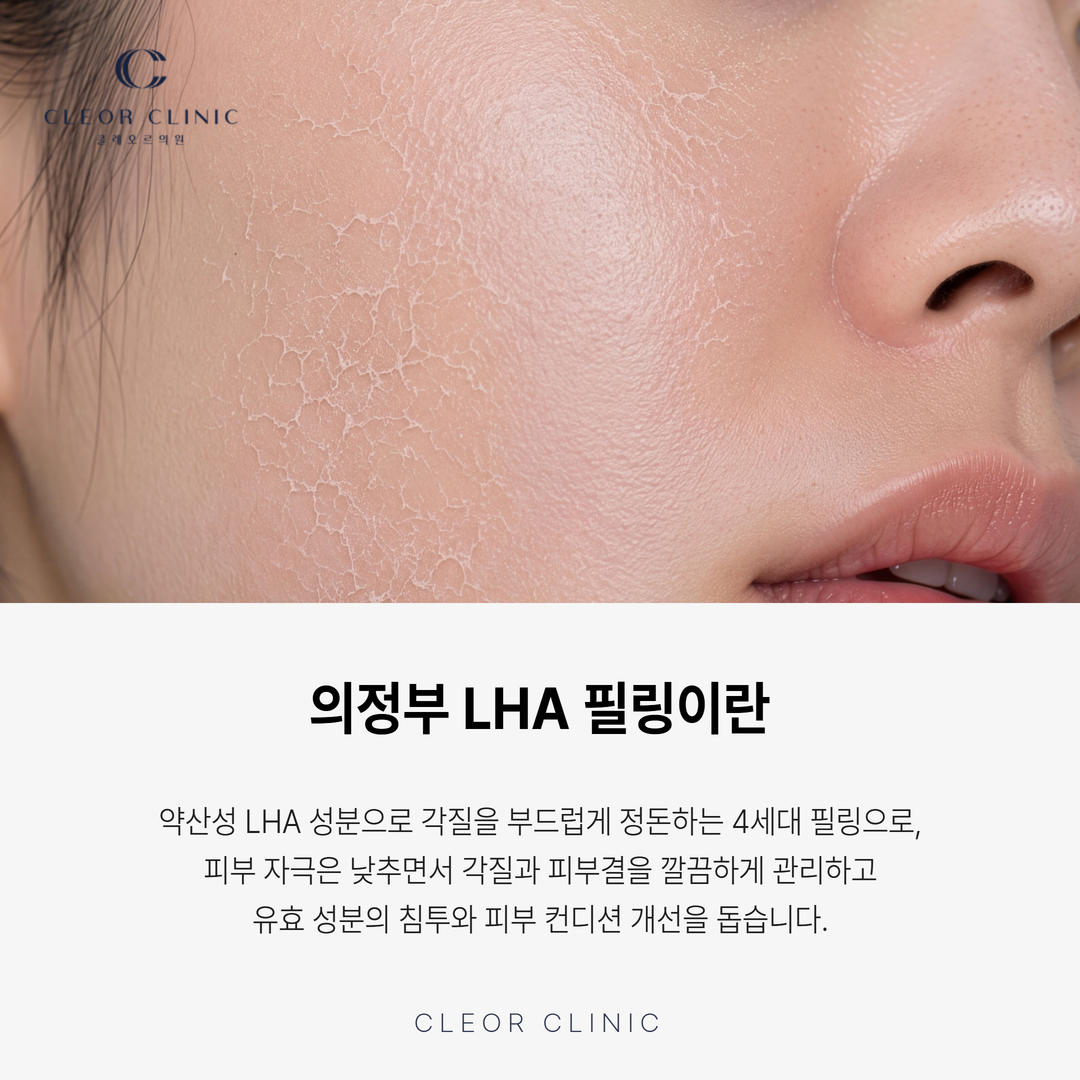
👉 The Uijeongbu LHA Peel is a 4th-generation peeling procedure that uses a pH 5.5 weakly acidic LHA (Lipohydroxy Acid) ingredient developed by L'Oréal of France
to gently dissolve the stratum corneum, and it is performed under the name LHALA Peel.
LHA stands for Lipohydroxy Acid, meaning a lipophilic hydroxy acid.
It is a derivative of salicylic acid (BHA), and its representative component is capryloyl salicylic acid.
While traditional AHA/BHA peels work by breaking the connections between dead skin cells using strong acidity,
LHA works in a weakly acidic state similar to the skin's own acidity,
so the approach is fundamentally different because it gently dissolves the stratum corneum.
At our Uijeongbu branch, we use the L'Oréal-developed LHALA Peel solution,
which is a double-solution method combining LHA with alkali and lipid membrane components,
inducing both effective ingredient penetration and normalization of the exfoliation cycle while reducing irritation.
4 Reasons Why LHA is Classified as a 4th-Generation Peel
👉 LHA has established itself as a 4th-generation peeling ingredient that differentiates itself from traditional acidic peels due to four reasons: weakly acidic pH, lipophilic properties, large molecular size, and selective action.
Weakly Acidic pH 5.5 - Similar to the skin's natural acidity
The biggest differentiator of LHA is its weakly acidic pH of 5.5.
The skin naturally maintains a weak acidity of pH 5–6,
and because LHA has a pH almost identical to this,
it acts only on the stratum corneum without damaging the skin barrier.
While traditional AHA/BHA peels were highly irritating due to their pH 2–3 acidity,
LHA is positioned to significantly alleviate redness and irritation after peeling.
Lipophilic - Reaches even sebum-clogged pores
LHA is a lipophilic (oil-loving) ingredient.
While the water-soluble ingredient AHA only reaches the surface of the epidermis,
LHA is lipophilic, so it penetrates into sebum-clogged pores to clear both dead skin cells and sebum.
This characteristic is particularly effective for those who need both oily/combination skin and pore care.
Large Molecular Size - Penetrates slowly to minimize irritation
LHA has a relatively large molecular size compared to other acid ingredients.
Because the molecules are large, they do not absorb rapidly into the skin but penetrate slowly and deeply,
and this characteristic acts as a decisive factor in minimizing irritation.
This is an effective direction for those who found peels burdensome due to sensitive skin.
Selective Action - Reacts only to sebum-clogged pores
LHA has the characteristic of selectively acting on pores filled with sebum.
It does not react significantly on normal skin areas and only cleanses the necessary areas,
so the burden of irritating normal skin after peeling is greatly reduced.
Comparison of the 4 Major Peeling Ingredients: AHA, BHA, PHA, LHA
👉 The four representative chemical peeling ingredients are AHA, BHA, PHA, and LHA, which differ in acidity, characteristics, and suitable skin types,
and LHA is classified as the 4th-generation ingredient that is the least irritating among them.
AHA (Alpha Hydroxy Acid) - 1st Generation
These are fruit-derived ingredients such as glycolic acid, lactic acid, and citric acid.
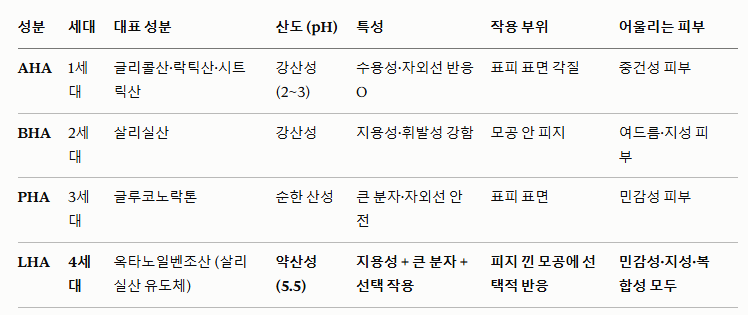
Being water-soluble, they act on the surface of the epidermis and are highly acidic with a pH of 2–3.
While the exfoliation effect is strong, they cause irritation and UV sensitivity,
making UV protection essential. They are frequently used for dry/combination skin.
BHA (Beta Hydroxy Acid) - 2nd Generation
Salicylic acid is the representative ingredient, and being lipophilic, it reaches sebum inside pores.
It is effective for acne improvement and sebum control, but it is highly acidic and irritating,
and its high volatility limits its penetration to the epidermis.
PHA (Polyhydroxy Acid) - 3rd Generation
Gluconolactone is the representative ingredient, which has a large molecular size and mild acidity.
It is less irritating than AHA/BHA and has lower UV sensitivity,
so it is used for sensitive skin, but it is not lipophilic, so it has limitations in reaching inside pores.
LHA (Lipohydroxy Acid) - 4th Generation
It is a derivative of salicylic acid with a pH of 5.5 (weakly acidic).
Combining three characteristics: lipophilic + large molecular size + selective action,
it is used effectively for sensitive, oily, and combination skin alike,
and it is currently the least irritating among peeling ingredients.
How the LHALA Peel is Performed
👉 The LHALA Peel is performed using a double-solution method that combines LHA with alkali and lipid membrane components,
and it approaches exfoliation in four stages: protein coagulation, effective ingredient penetration, normalization of the exfoliation cycle, and recovery from within the skin.
Double Solution Application
The LHALA solution developed by L'Oréal is a form where LHA is combined with
alkali (HP-Sol) and lipid membrane (Lipids) components.
When the solution is applied to the treatment area after cleansing,
the stratum corneum dissolves gently, and effective ingredients penetrate into the skin.
Protein Dissolving Method (A different principle from peeling)
While traditional micro-peeling methods work by coagulating proteins and then artificially stripping them off,
the LHALA Peel gently dissolves proteins through the combination of LHA, alkali, and lipid membranes
while simultaneously allowing effective ingredients to penetrate.
It is a direction that improves the skin from within without the irritation of forced stripping.
Normalization of the Exfoliation Cycle
Normalizing the disrupted skin regeneration cycle is the core approach of the LHALA Peel.
In healthy skin, dead skin cells naturally fall off in a cycle of about 28 days,
but if this cycle is disrupted by stress, irritation, or aging, dead skin cells become thick and clump together,
leading to a dull skin tone and recurring breakouts.
As LHA normalizes the exfoliation cycle,
the skin itself moves toward becoming healthier.
Basic and Ultra 2-Step Configuration
The LHALA solution consists of two steps, Basic and Ultra,
which are combined according to the skin condition and treatment intensity.
By continuing regular care with Basic and adding in-depth care with Ultra,
an approach tailored to individual conditions is possible.
Why the LHALA Peel is Combined with Other Procedures
👉 While the LHALA Peel is used as a standalone treatment, it creates synergy when combined with other procedures such as
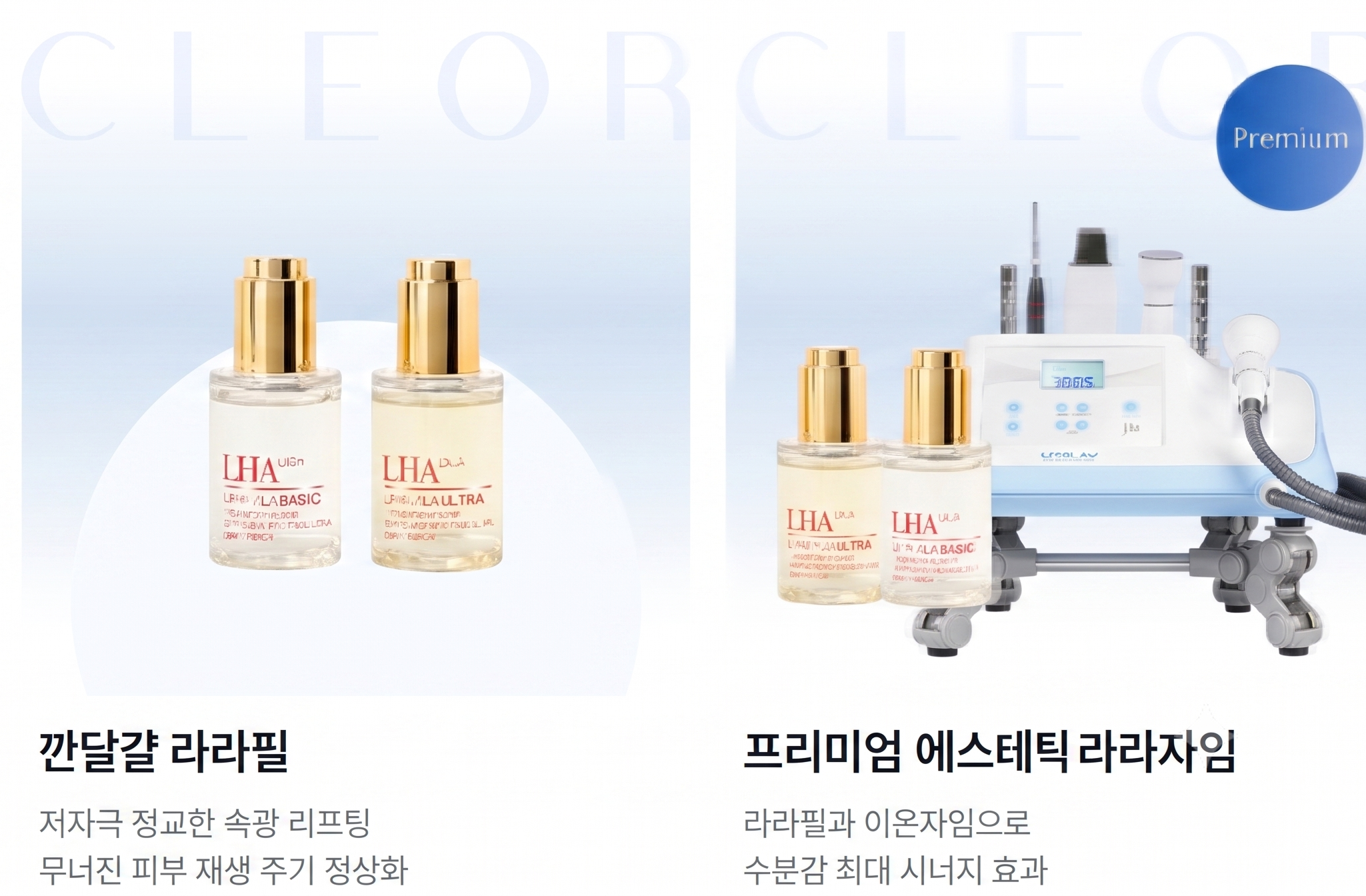
pigment lasers, lifting, and skin boosters for the purpose of exfoliating and promoting the penetration of effective ingredients.
Combination with Pigment Lasers
If you perform a pigment laser after exfoliating with the LHALA Peel,
the laser energy is delivered more accurately to the pigment.
Because the laser reaction occurs uniformly in an exfoliated state,
the pigment improvement results are stabilized.
Combination with Lifting Procedures
If you exfoliate the skin surface with the LHALA Peel before a lifting procedure,
the lifting results synergize with the surface condition.
A combination that provides deep stimulation through lifting and surface cleansing through the LHALA Peel is frequently considered.
Combination with Skin Boosters
If you exfoliate the stratum corneum with the LHALA Peel before a skin booster procedure,
the effective ingredients of the skin booster are absorbed more smoothly into the dermis.
This is a combination frequently used in regular care plans.
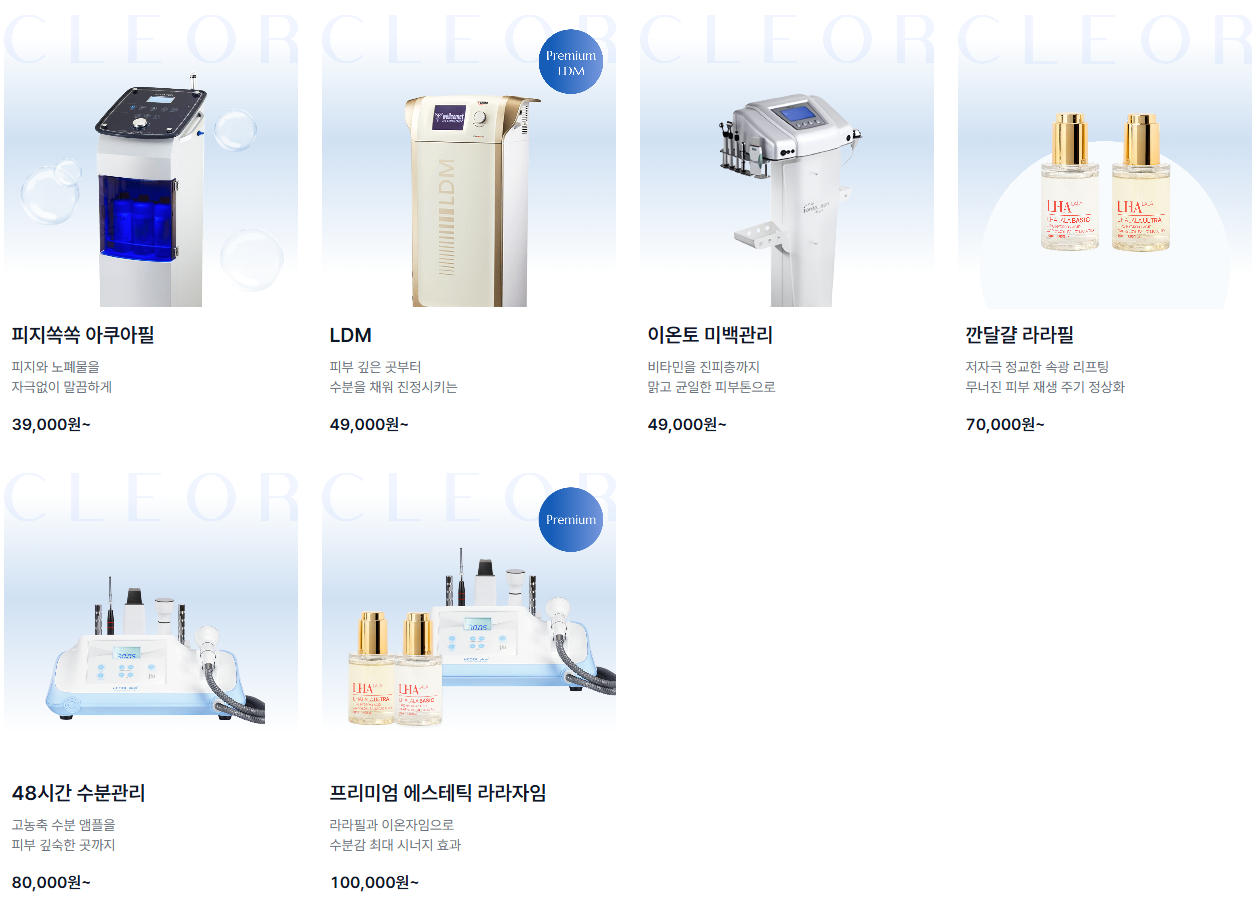
Uijeongbu LHA Peel Lineup
👉 At our Uijeongbu branch, we operate LHA peeling through the LHALA Peel procedure, and you can choose the number of sessions according to your regular care plan.
Generally, regular sessions at 2–4 week intervals lead to stable normalization of the exfoliation cycle,
and as sessions accumulate, the skin condition improves from the foundation.
In addition to standalone LHALA Peels,
combinations with other procedures such as pigment lasers, lifting, and skin boosters are possible and adjusted according to the purpose of care.
The number of sessions and combinations suitable for your skin condition and care plan
will be reviewed together during the preliminary consultation.
Who is the LHA Peel Suitable For?
Those who found the acidic irritation of traditional AHA/BHA peels burdensome
Those who need peeling care even for sensitive or delicate skin
Those with oily/combination skin who need sebum care inside pores
Those whose skin tone has become dull due to a disrupted exfoliation cycle
Those who want a gentler approach than forced peeling methods
Those who need skin surface preparation before pigment laser or lifting procedures
Uijeongbu LHA Peel Side Effects and Things to Know in Advance
👉 The Uijeongbu LHA Peel is a treatment with significantly lower irritation compared to acidic peels, but reactions may vary depending on individual skin conditions and ingredient allergies.
Light redness or a slight burning sensation may appear on the face immediately after the procedure.
Generally, this clears up naturally within a few hours.
Although LHA is a pH 5.5 weak acid, it is an acid ingredient,
so UV protection and irritation management for a few days after the procedure are still important.
Recovery is stable if you manage it mainly with regenerative creams and soothing creams after the procedure.
Because the LHALA Peel is a method of normalizing the exfoliation cycle, rather than a dramatic change from a single session,
results stabilize as sessions accumulate with regular 2–4 week intervals.
As it is a salicylic acid derivative, if you have a history of salicylic acid allergy,
it must be confirmed during the preliminary consultation.
Following the guidance of experienced medical staff, the treatment intensity is decided after checking
your skin condition and status during the preliminary consultation.
If any of the following apply, treatment may be restricted or
preliminary confirmation may be required, so please inform us during the consultation.
If you are pregnant or breastfeeding
If you have a history of allergy to salicylic acid or aspirin
If there is an active infection, wound, or herpes in the treatment area
If you have recently undergone a strong peel, dermabrasion, or laser procedure
If you are taking photosensitive medication (such as isotretinoin)
If you have recently tanned or have been exposed to a lot of UV rays
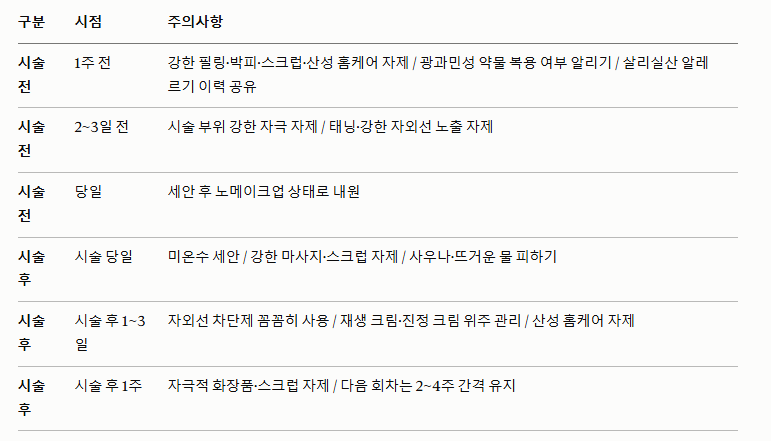
⚠️ Precautions Before and After LHA Peel Treatment
👉 The LHA Peel is a treatment where result stability and recovery speed vary depending on irritating home care before the procedure and UV protection after the procedure.
❓ Frequently Asked Questions (FAQ)
Q. When can I see the results of the Uijeongbu LHA Peel?
You can see that the skin surface becomes smoother immediately after the procedure.
The reaction of normalizing the exfoliation cycle settles over 2–4 weeks,
and with regular repeated sessions, the skin condition improves from within.
Q. What is the biggest difference between the LHALA Peel and other peels?
The fact that it is pH 5.5 weakly acidic.
While traditional AHA/BHA peels work by breaking the connections between dead skin cells with a pH 2–3 strong acid,
LHA is a method of gently dissolving the stratum corneum with a weak acid that is the same as the skin's own acidity,
so the significantly low irritation is the decisive difference.
Q. Can sensitive skin also receive it?
Since LHA is a 4th-generation ingredient that is currently among the least irritating peeling ingredients,
it is an option frequently used for sensitive skin.
It is a procedure considered as an alternative for those who had severe irritation from traditional peels.
Q. How much pain is there during the procedure?
There may be a slight burning sensation during the procedure, but it proceeds comfortably with almost no pain.
Redness after the procedure also clears up within a few hours, so there is no hindrance to returning to daily life the next day.
Q. How often should I receive it?
Generally, 2–4 week intervals are recommended.
Since the skin regeneration cycle is about 28 days, repeated sessions according to this cycle
allow the normalization reaction of the exfoliation cycle to accumulate stably.
Q. Can I wear makeup after the LHALA Peel?
Light makeup is possible from the evening of the day of the procedure.
Manage with mild products for a few days after the procedure,
and taking care of sunscreen will help with stable recovery.
Q. Can it be combined with other procedures?
The LHALA Peel has synergy when combined with procedures such as pigment lasers, lifting, and skin boosters.
Because it has the effect of facilitating the penetration of effective ingredients and energy delivery of other procedures through exfoliation,
it is frequently combined in regular care plans.
Q. Do dead skin cells fall off in clumps after the procedure?
The LHALA Peel is not a method of artificially stripping off dead skin cells,
but a method of normalizing the exfoliation cycle, so it is cleaned up gently without forced exfoliation.
It is a flow where dead skin cells are naturally cleaned up over a few days after the procedure.
Most traditional peeling ingredients were highly acidic with a pH of 2–3,
which caused problems of recurring redness and irritation by damaging not only dead skin cells but also the skin barrier.
To solve this irritation issue, the ingredient developed by L'Oréal is LHA,
and it is a 4th-generation peeling ingredient because it gently dissolves the stratum corneum with a pH 5.5 weak acid that is the same as the skin's own acidity.
The Uijeongbu LHA Peel is performed as a LHALA Peel procedure,
and it is a treatment that induces both normalization of the exfoliation cycle and penetration of effective ingredients while minimizing irritation
through a double-solution method where alkali and lipid membranes are combined with LHA.
At our Uijeongbu branch, in addition to standalone LHALA Peels,
you can combine it with other procedures such as pigment lasers, lifting, and skin boosters.
If you want to increase the stability of the pigment reaction of a pigment laser after exfoliating with the LHALA Peel,
gain surface condition synergy for a lifting procedure,
or want the effect of promoting the absorption of effective ingredients of a skin booster,
you can consider combining it in your regular care plan.
We will personally check the direction suitable for your skin condition and care purpose during the consultation.
If you found the irritation of traditional peels burdensome or need peeling care for sensitive skin,
please feel free to visit Cleor Clinic Uijeongbu Branch.
Even before deciding on a procedure, you can review the LHALA Peel direction suitable for your skin condition
through a preliminary consultation.
※ This content is for general information purposes, and results may vary by individual.
Please decide on accurate diagnosis and whether to proceed with the procedure through a consultation with a specialist.
본인 피부 상태와 어울리는 라라필 진행 방향을 함께 살펴보실 수 있습니다.
※ 본 내용은 일반적인 정보 제공을 위한 글이며, 개인에 따라 결과는 달라질 수 있습니다.
정확한 진단과 시술 여부는 전문의 상담을 통해 결정하시기 바랍니다.