
Hello.
I am Director Cho Hyuk-chan of Cleor Clinic Uijeongbu Branch.
You may have noticed one or two small, flat bumps on your forehead or cheeks,
and then felt as if more similar ones appeared nearby before you knew it.
"Even with makeup, the surface is bumpy, so it doesn't apply well,
and I'm concerned about them gradually increasing on my forehead and jawline."
Many people visit us with these concerns.
Unlike other skin bumps, flat warts
are caused by HPV (Human Papillomavirus) infection,
and they tend to spread and increase from the same spot to adjacent areas.
If irritated by scratching or shaving,
the virus can spread to the surrounding skin, causing new bumps to form.
In such cases, the approach to reduce viral lesions by precisely refining the surface is
the Cleor Uijeongbu Flat Wart CO2 Laser treatment.
Today, I will explain what kind of marks Uijeongbu flat warts are,
and how they differ from other similar-looking bumps.
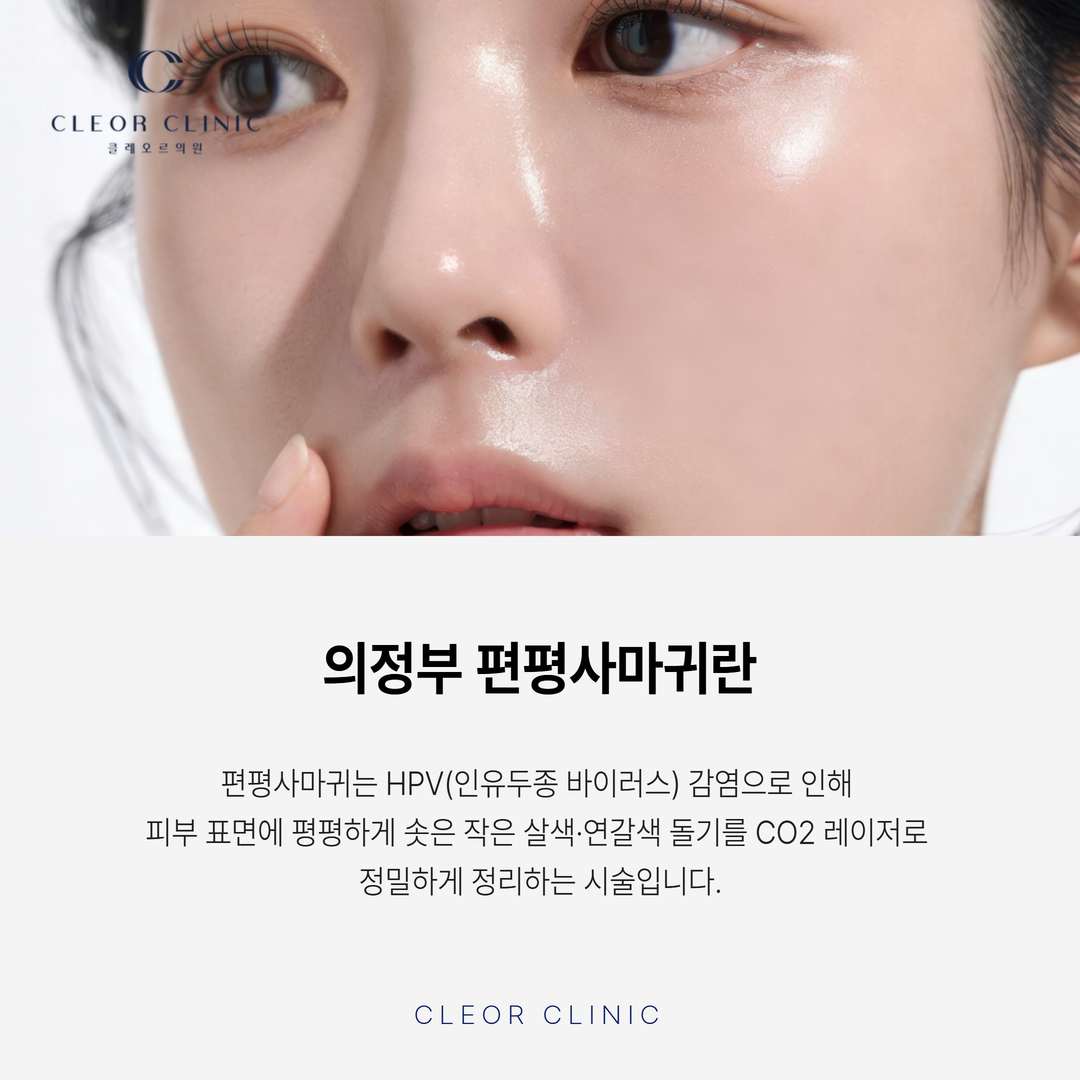
What are Uijeongbu Flat Warts?
👉 Uijeongbu Flat Warts are caused by HPV (Human Papillomavirus) infection,
and this procedure uses a CO2 laser to precisely refine small, flesh-colored or light brown flat bumps on the skin surface.
The medical term for flat warts is Verruca plana.
They are small, about 1–3 mm in size,
and often appear in clusters with a smooth, flat surface.
The main areas of occurrence are the forehead, cheeks, jaw, neck, and back of the hands,
which are exposed areas of the face and hands.
Unlike other bumps that often occur in areas of friction,
they tend to spread as the virus takes hold in areas
where immunity is weakened or microscopic wounds have occurred.
Since simple surface removal alone can cause them to spread,
this is a category where a medical laser approach to precisely refine viral lesions is recommended.
Differences Between Flat Warts and Similar Bumps
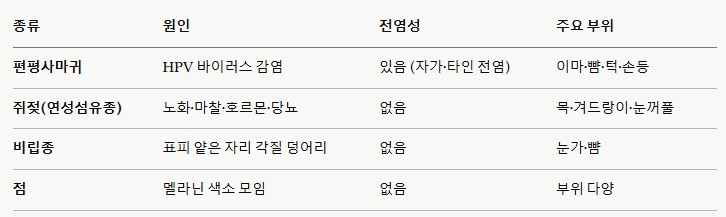
👉 Not all small skin bumps are the same;
the approach varies by category due to differences in cause, location, and contagiousness.
The key difference is that only flat warts are viral.
If you scratch them with fingernails or a razor as a self-treatment,
the virus can move to the surrounding normal skin,
and it is frequently reported that one or two bumpscan spread into many.
It is safer to confirm the category first and then refine them using the appropriate method.
Technical Features of Uijeongbu Flat Wart Treatment
👉 The CO2 laser used for Uijeongbu Flat Warts
is a medical precision laser that operates at a 10,600 nm infrared wavelength.
10,600 nm Wavelength and Water Absorption
CO2 laser energy reacts selectively to moisture within the tissue,
acting narrowly on the flat wart lesion itself.
Precision Vaporization of Lesions
As the moisture in the area touched by the laser evaporates rapidly,
the virus-infected surface tissue is vaporized and removed.
Protection of Surrounding Skin
Thanks to the structure that acts narrowly only on the lesion,
the procedure can be performed while minimizing irritation to the surrounding normal skin.
Suitable for Small and Multiple Lesions
Due to the nature of flat warts being small and clustered,
this equipment is known to be suitable for precisely treating multiple lesions at once.
Effects and Advantages of Uijeongbu Flat Wart Treatment
👉 The key advantages of Uijeongbu Flat Wart treatment
can be summarized into three points: direct removal of viral lesions, short procedure time, and effective response to multiple clusters.
First, it directly removes the virus-infected surface tissue.
Unlike self-treatment that scrapes the surface,
it works by vaporizing the lesion with precision energy to reduce viral residue.
Second, the procedure time is short.
Since each lesion is often completed in a short time,
it is a relatively convenient treatment to receive.
Finally, it is well-structured to handle clustered lesions.
Flat warts often appear in groups,
and it is reported that multiple lesions can be refined in a single session due to the possibility of precision work.
Types of Uijeongbu Flat Wart Treatments
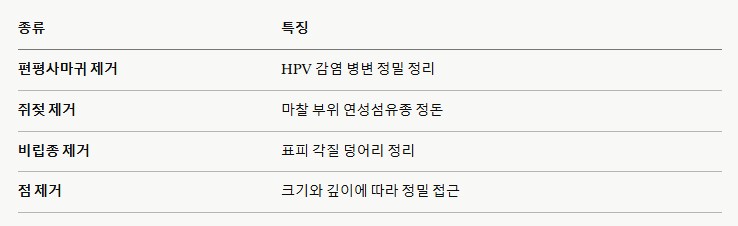
👉 The Uijeongbu branch manages a category of CO2 laser-based benign skin bumps, including flat warts.
Flat warts, skin tags, and milia often look similar and can be confusing.
After identifying the category during the consultation phase,
the process proceeds to refine other marks in the same area all at once.
However, since flat warts are viral, they can remain latent and recur in the same spot,
so it is a category where cumulative management is recommended.
Who Should Consider Uijeongbu Flat Wart Treatment
Those with small, flat bumps clustered on the forehead, cheeks, or jaw
Those concerned about bumps gradually spreading from one spot to adjacent areas
Those whose makeup does not apply well due to a bumpy skin surface
Those who have experienced an increase in lesions after attempting self-treatment
Those who also see similar small bumps on the back of their hands
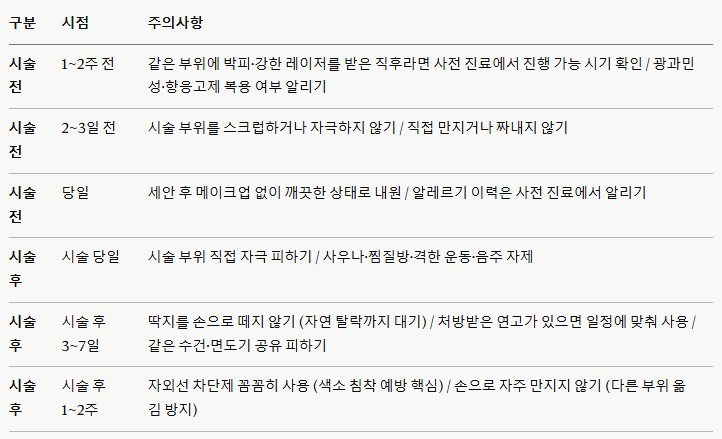
⚠️ Precautions Before and After Uijeongbu Flat Wart Treatment
👉 For Uijeongbu Flat Warts, management at each stage—both before and after the procedure—affects recovery and the prevention of hyperpigmentation.
Side Effects and Important Considerations for Uijeongbu Flat Warts
👉 While Uijeongbu Flat Wart treatment removes surface lesions in one session,
it is a category where recurrence in the same or other areas is reported due to the nature of the virus.
Fine scabs, mild redness,
and temporary stinging may occur in the treated area.
In most cases, scabs fall off naturally within 1–2 weeks,
and it is reported that the redness subsides over time.
Hyperpigmentation or light marks may remain during the recovery process,
and in rare cases, scarring may occur, making early management crucial.
Flat warts can recur in the same or adjacent areas over time
as the HPV virus can remain latent and then reactivate.
In such cases, the approach is to provide cumulative management through additional consultations.
Please inform us in advance as the procedure may be restricted in the following cases:
If you are pregnant or breastfeeding
If there is active inflammation or a history of herpes in the treatment area
If you have a keloid-prone skin type
If you are taking photosensitizing drugs or anticoagulants
If you are undergoing immunosuppressive therapy
❓ Frequently Asked Questions (FAQ)
Q. Can Uijeongbu Flat Warts really be removed in one session?
Flat warts that are small and located near the surface
are often removed in a single session.
However, since the virus can remain latent,
recurrence in the same or adjacent areas is reported, and cumulative management is recommended in such cases.
Q. How do Uijeongbu Flat Warts spread?
It is known that the virus takes hold when
microscopic wounds occur on skin exposed to the HPV virus.
Self-contagion, where the individual spreads it to surrounding areas by scratching or shaving, is most common,
and transmission to others through sharing towels or razors is also reported.
Q. Why should I avoid self-treating Uijeongbu Flat Warts?
If you pick at them with your hands or shave them with a razor,
the virus can spread to the surrounding normal skin,
which is reported to potentially cause them to spread even further.
The risk of hyperpigmentation or scarring also increases.
Q. Will there be scars after the Uijeongbu Flat Wart procedure?
Small lesions often leave almost no marks.
Thorough UV protection during the recovery period and allowing scabs to fall off naturally
helps reduce the possibility of hyperpigmentation.
However, individual results may vary.
Q. Can I receive treatment for Uijeongbu Flat Warts and milia at the same time?
Depending on the area and number, they are often treated together on the same day.
However, if flat warts are widely distributed in multiple numbers,
it may be recommended to perform the treatment in separate sessions considering recovery.
Q. When can I apply makeup after the Uijeongbu Flat Wart procedure?
It is best to avoid direct irritation to the treated area on the day of the procedure.
Light base makeup is possible once the scabs have properly formed,
and avoiding heavy makeup that thickly covers the treated area will aid in recovery.
Small bumps that rise in flat clusters or spread sideways
are likely to be flat warts caused by the HPV virus.
Since self-treatment by scraping the surface can spread the virus further,
it is recommended to precisely refine the lesions using a medical laser.
Uijeongbu Flat Wart treatment is a non-surgical option that narrowly vaporizes surface lesions using a CO2 laser,
and we can also address skin tags, milia, and mole removal
within a single consultation.
The best approach for your skin condition
will be determined during your consultation.
If you are concerned about flat bumps on your forehead, cheeks, or the back of your hands,
please feel free to visit Cleor Clinic Uijeongbu Branch.
Even before deciding on a procedure, we will provide detailed guidance
on which category your skin marks belong to through a preliminary consultation.
※ This content is for general informational purposes, and results may vary depending on the individual.
Please consult with a specialist for an accurate diagnosis and to determine whether to proceed with the procedure.