
Hello.
I am Dr. Hyuk-chan Jo, Director of Cleor Clinic Uijeongbu Branch.
There are days when you look at your cheeks under the light in front of the mirror and realize that every mark has a different shape.
Marks that have been there for years are deeply indented, while those that appeared last winter are still shallow and slightly red.
When marks of different ages are mixed on one face, it is difficult to decide where to start.
Depending on when they were formed, marks have different depths and different wall shapes.
If you treat them all at once under the same conditions, the deep marks may not be reached, while the shallow ones may be over-stimulated.
Therefore, the first step in scar treatment is to categorize the shapes.
Today, we will look at how Uijeongbu scar laser treatment categorizes these marks and why the depth of penetration varies according to the wavelength.
What is Uijeongbu scar laser treatment?
👉 Uijeongbu scar laser treatment is a care process that first categorizes the shape and depth of the marks, then selects the wavelength and intensity to deliver stimulation only to the necessary layers.
While the skin is healing from a wound, new collagen is produced in the dermis.
If the fibers do not align properly and harden in a disorganized state, a mark remains.
Areas where collagen has accumulated excessively become raised (hypertrophic), while areas where it is lacking become depressed (atrophic).
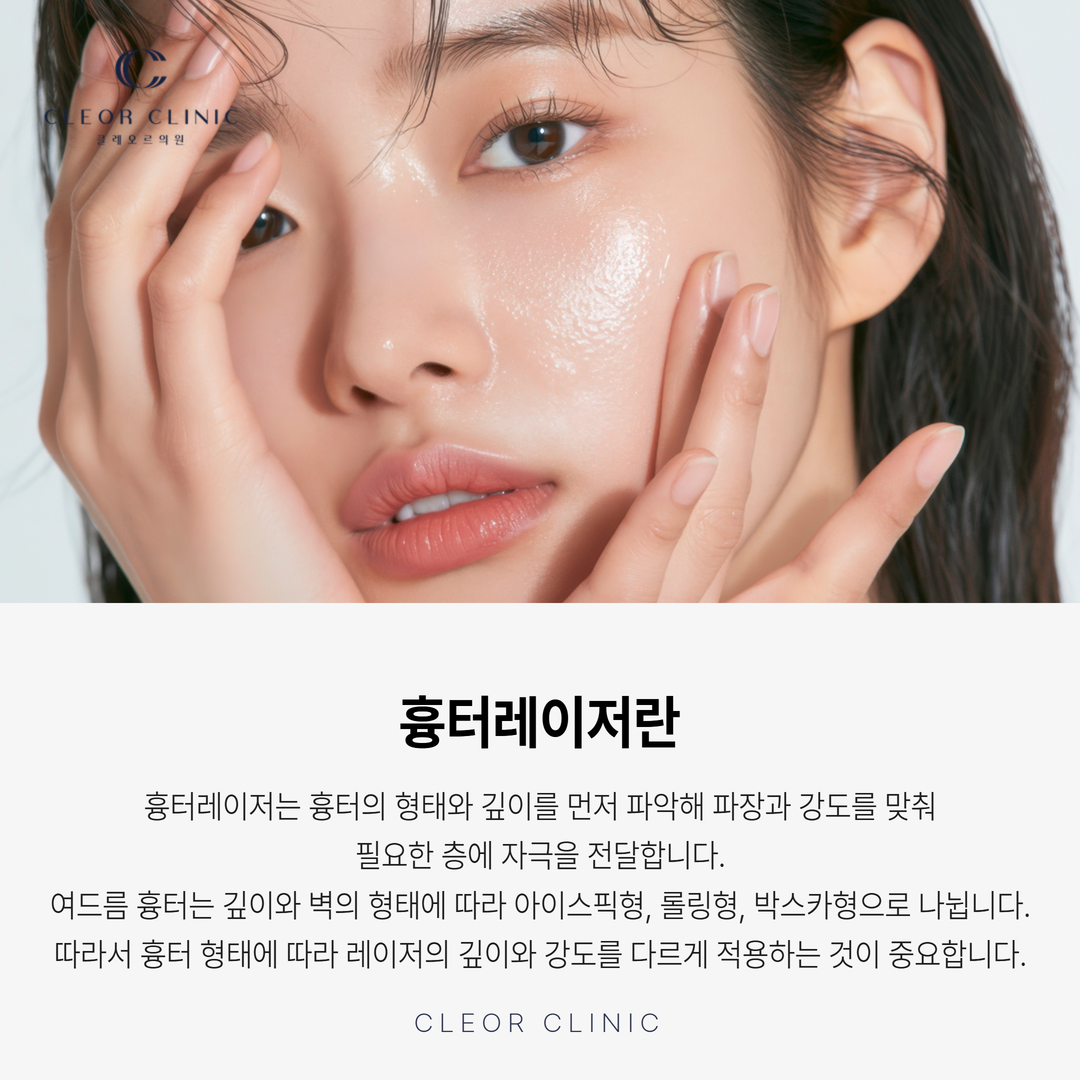
Acne marks are further divided into three types within the atrophic category:
Ice-pick type, which has a narrow opening and goes deep down; rolling type, which has gentle, wide, undulating walls; and boxcar type, which has vertical walls and a flat bottom.
Because these three types have different depths and wall angles, applying the same stimulation to all of them will result in missing the target.
Strengths of Uijeongbu scar laser treatment
👉 The strengths of Uijeongbu scar laser treatment lie in the ability to select the reaching depth according to the wavelength, leaving intact tissue between stimulations to secure a starting point for recovery, and distributing treatment differently for marks of different ages in one session.
First, the wavelength determines the reaching depth.
The way a laser is consumed in the skin depends on how well the water in the tissue absorbs that wavelength.
The 2940nm Erbium laser is highly absorbed by water, so it is mostly consumed in the shallow layers as soon as it touches the surface.
Therefore, it generates little heat spreading to the surroundings and is used for shallow refinement.
The 10600nm CO2 laser has lower water absorption, so it is not fully consumed in the same spot and penetrates to deeper layers.
This is why it is used for marks that need to reach the bottom, such as deep ice-pick scars.
Second, it leaves intact tissue between stimulations.
Instead of passing over the entire surface at once, it creates columns of stimulation, leaving untouched skin in between.
The re-epithelialization process occurs as cells at the edge of the wound move sideways to fill the empty space.
If intact tissue remains between the columns, the distance to cover is shorter, making recovery easier, and the remaining dermis serves as a structural guide for the newly formed collagen.
Third, it distributes treatment for marks of different ages.
Old marks are already hardened and require a deeper reach, while recent marks still have redness and are approached more shallowly.
Since the depth and density can be adjusted for each section even on the same face, deep marks are treated sufficiently while shallow marks are not over-treated.
Operating principle of Uijeongbu scar laser treatment
👉 Uijeongbu scar laser treatment follows a sequence starting from water absorption, followed by column-shaped stimulation, migration of edge cells, and collagen rearrangement.
The first step is absorption.
Since most skin tissue is water, when laser light enters, the depth at which energy is consumed is determined by how much the water absorbs that wavelength.
Wavelengths with strong absorption stop at shallow spots, while those with weak absorption go deeper.
The target layer determines the choice of wavelength.
The second step is the column.
A narrow, column-shaped passage is created where the stimulation enters, and untouched tissue remains around it.
The skin reads these columns as targets for repair and recruits the cells necessary for recovery.
The temporary redness and swelling immediately after are signs that this step is in progress.
The third step is covering and rearrangement.
Cells at the edge of the columns move inward to cover the surface, and fibroblasts in the lower layers produce new collagen.
Since this process occurs in a managed state rather than an acute inflammatory state, there is room for the fibers to be laid out neatly along the surrounding structures.
The depth and wall angle of the depressed areas gradually become more gentle over several sessions, and the degree and timing vary by individual.
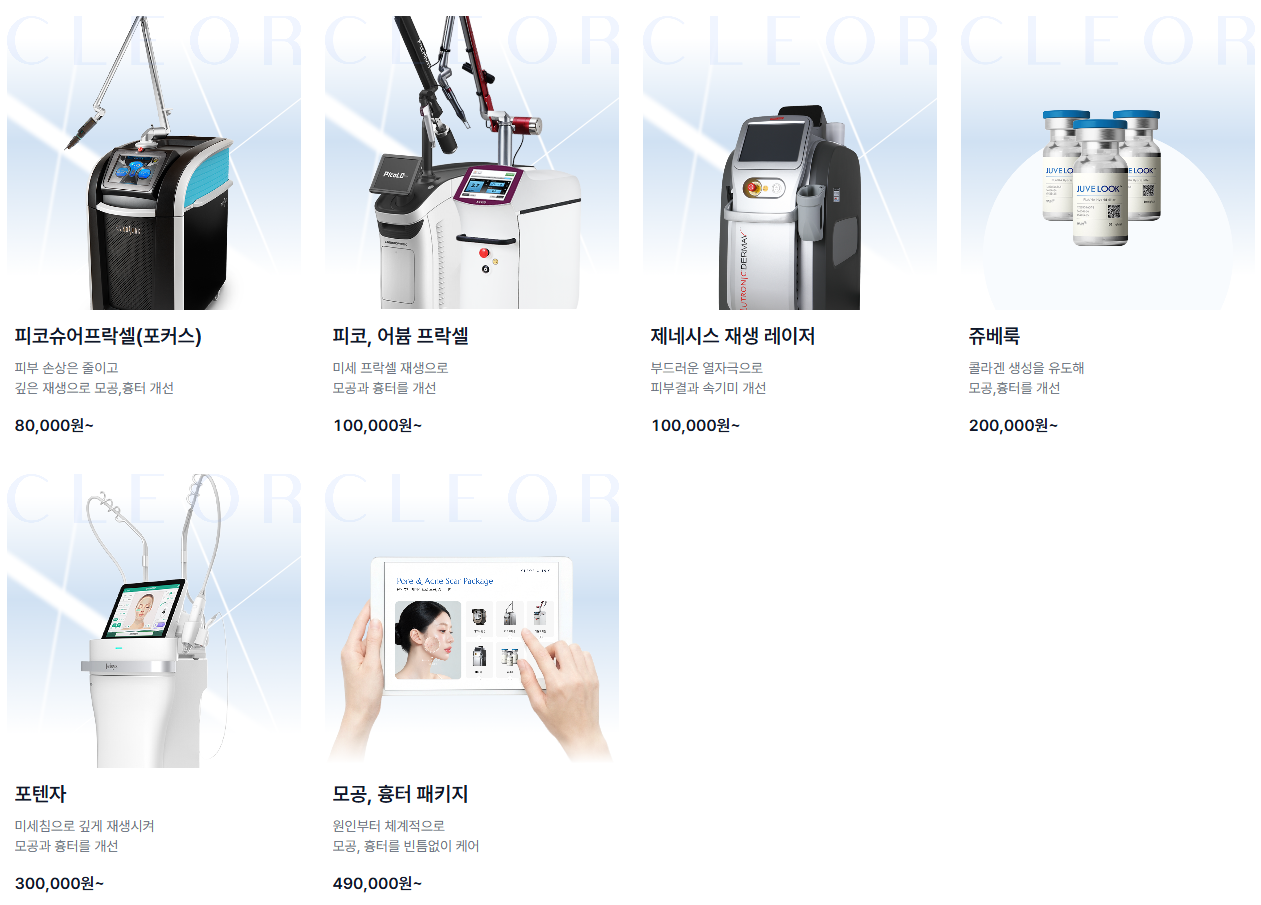
Equipment and programs for Uijeongbu scar laser treatment
👉 Cleor Clinic Uijeongbu Branch operates different Fraxel and radiofrequency equipment depending on the depth of the marks.
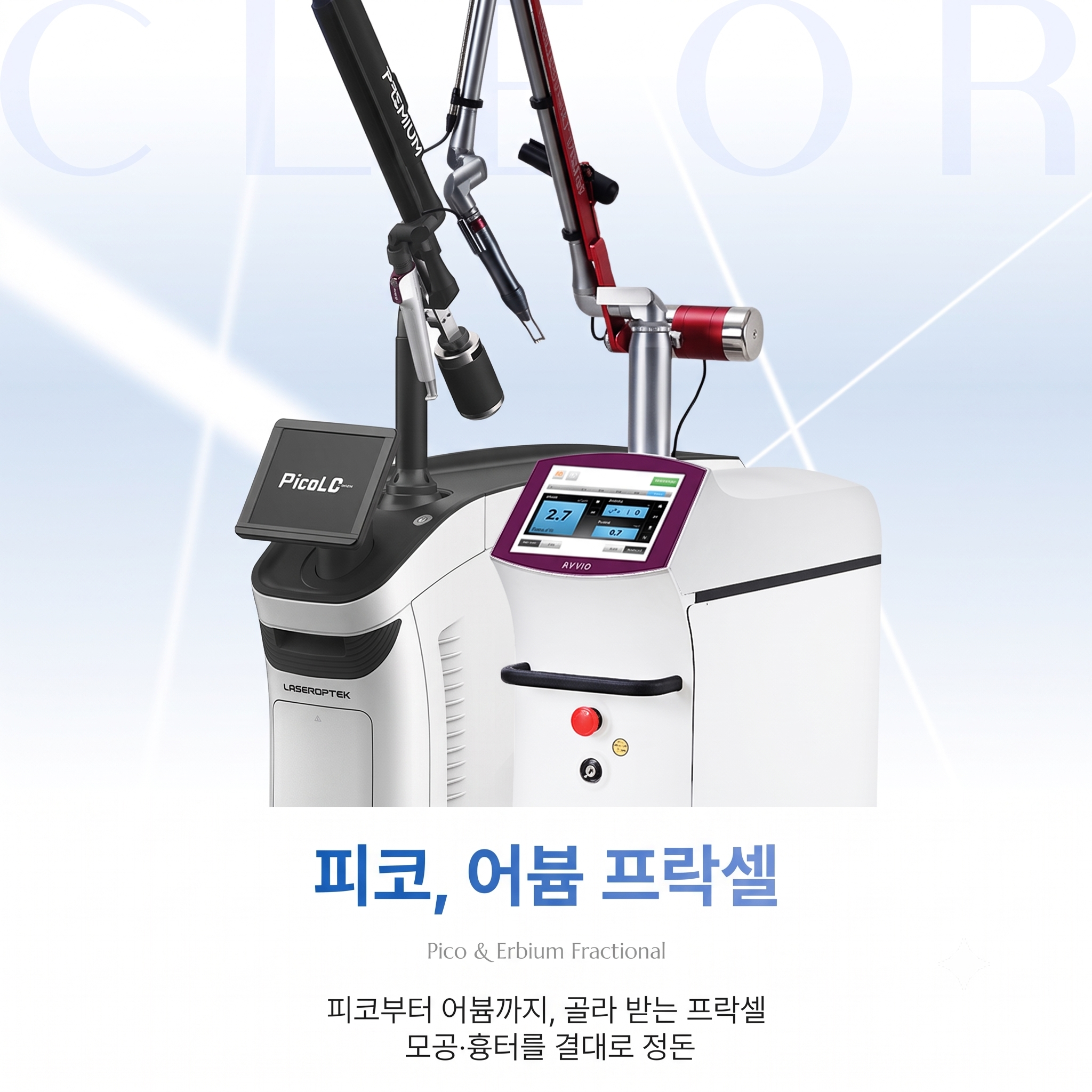
Fraxel-type equipment leaves micro-columnar stimulation on the skin while leaving untouched sections in between.
Pico Fraxel uses very short-duration pulses, while Erbium Fraxel uses a wavelength well-absorbed by water to treat near the surface.
Picosure Fraxel also includes configurations for narrowing the range, such as the butterfly zone.
Potenza is a device that delivers radiofrequency energy to a set depth through micro-needles.
When using a pumping tip, the configuration changes to deliver ingredients to that depth.
Genesis regenerative laser is configured to gently build up heat in the dermis, so it is used in conjunction when addressing the red tones around the marks.
Since the depth and boundaries of marks vary even on the same face, we often divide the area rather than using a single device for everything.
The sequence is determined after checking the contours.
Who is Uijeongbu scar laser treatment for?
Those who have a mix of old and recent marks in one area.
Those whose acne has subsided but are bothered by the remaining depressed marks.
Those whose cheek contours are particularly visible when light hits from the side.
Those who found it difficult to manage with the same method because the depth of each mark is different.
Those who prefer to proceed in multiple sessions rather than one strong treatment.
Types of Uijeongbu skin lasers
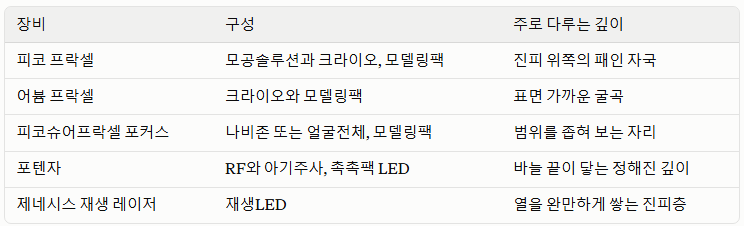
👉 The items for treating marks are divided according to the depth to be reached and the layer being treated.
The laser items currently operated at Cleor Clinic Uijeongbu Branch are summarized below.
Which condition is appropriate is determined during the consultation by looking at the shape, depth, and age of the marks.
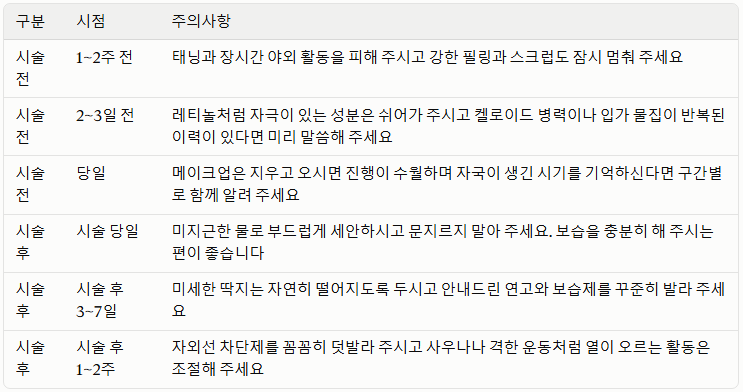
Side effects and precautions for Uijeongbu scar laser treatment
👉 Uijeongbu scar laser treatment is a care process that involves a recovery period, so management and sun protection during that time significantly affect the subsequent progress.
⚠️ Precautions before and after Uijeongbu scar laser treatment
❓ Frequently Asked Questions (FAQ)
Q. Is Uijeongbu scar laser treatment applicable to old marks?
A. Hardened marks do not resolve on their own over time, so old marks are also candidates for treatment.
However, because the required depth is deeper, the intensity and density are set differently than for recent marks.
Q. Why is the wavelength divided in Uijeongbu scar laser treatment?
A. Since most skin tissue is water, the degree of absorption varies by wavelength, and that difference determines the depth at which energy is consumed.
2940nm is mostly consumed in shallow layers, while 10600nm goes deeper.
Q. Is Uijeongbu scar laser treatment performed differently depending on the scar type?
A. Ice-pick, rolling, and boxcar types have different depths and wall angles, so the reaching depth and density are adjusted to fit the type.
This is why we divide the area even on one face.
Q. How long does recovery take after Uijeongbu scar laser treatment?
A. Because it is a method that leaves intact tissue between columns, the distance for edge cells to cover is short.
However, there are individual differences in the speed at which the surface is refined, so we also consider the schedule when setting the intensity.
Q. How should I manage scabs after Uijeongbu scar laser treatment?
A. It is best to let the micro-scabs that form where the columns were created fall off naturally.
Forcing them off can leave marks, so please continue with moisturizing and sun protection.
Q. Is Uijeongbu scar laser treatment finished in one session?
A. It is common to proceed with multiple sessions at intervals because it takes time for the newly created collagen to settle into a stable form.
Uijeongbu scar laser treatment is a care approach that views marks not as surface stains, but as issues of shape and depth.
By utilizing the property that different wavelengths reach different layers due to varying water absorption, we distribute different conditions to shallow and deep areas, and leave intact tissue between columns to provide a starting point for recovery for edge cells to migrate.
The more mixed old and recent marks are, the harder it is to treat with a single condition.
At Cleor Clinic Uijeongbu Branch, we operate Erbium lasers, CO2 lasers, and Fraxel together to divide the depth and density for each section.
We will personally check which condition is right for you during the consultation.
If your eyes have been lingering on the same spots whenever light hits from the side, please feel free to come in and talk to us.
※ This content is for general information purposes only, and individual results may vary.
Please consult with a specialist to determine the exact diagnosis and suitability for treatment.
클레오르의원 의정부점에서 운영 중인 레이저 항목을 정리하면 아래와 같습니다.
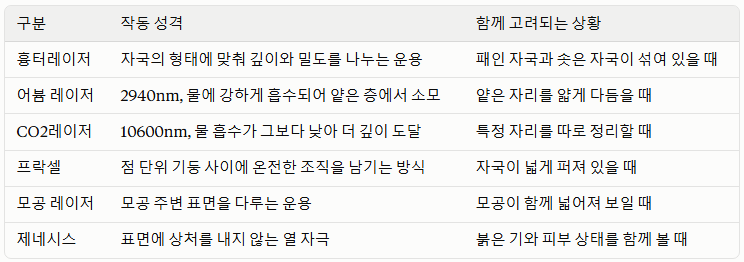
어느 조건이 맞을지는 자국의 형태와 깊이, 생긴 시기를 함께 보고 진료에서 잡습니다.
의정부 흉터레이저 부작용과 미리 알아두실 점
👉 의정부 흉터레이저는 회복 과정을 거치는 케어라 그 기간의 관리와 자외선 차단이 이후 경과에 크게 작용합니다.
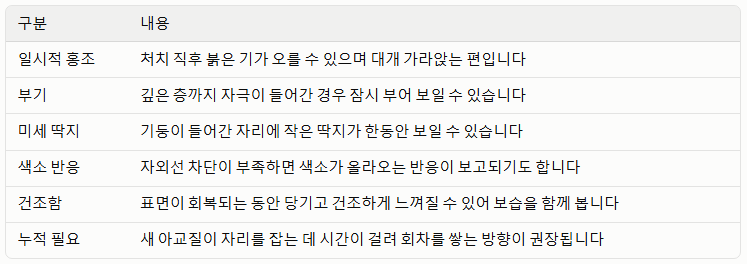
⚠️ 의정부 흉터레이저 시술 전후 주의사항
❓ 자주 묻는 질문 (FAQ)
Q. 의정부 흉터레이저는 오래된 자국에도 적용되나요?
A. 굳어 버린 자국은 시간이 지나도 스스로 정돈되지 않기 때문에
오래된 자리도 대상이 됩니다.
다만 도달해야 할 깊이가 깊어 최근에 생긴 자국과는
강도와 밀도를 달리 잡습니다.
Q. 의정부 흉터레이저에서 파장을 나누어 쓰는 이유는 무엇인가요?
A. 피부 조직의 대부분이 물이라 파장마다 물에 흡수되는 정도가 다르고,
그 차이가 에너지가 소모되는 깊이를 정합니다.
2940nm는 얕은 층에서 대부분 소모되고 10600nm는 더 아래까지 내려갑니다.
Q. 의정부 흉터레이저는 자국 유형에 따라 다르게 진행되나요?
A. 아이스픽형과 롤링형, 박스카형은 깊이와 벽의 각도가
달라 도달 깊이와 밀도를 유형에 맞춰 나눕니다.
한 얼굴 안에서도 구간을 나누어 배분하는 이유가 여기에 있습니다.
Q. 의정부 흉터레이저를 받으면 회복에 얼마나 걸리나요?
A. 기둥 사이에 온전한 조직을 남기는 방식이라 가장자리 세포가
덮어 와야 할 거리가 짧습니다.
다만 표면이 정돈되는 속도에는 개인차가 있어 강도를
잡을 때 일정도 함께 봅니다.
Q. 의정부 흉터레이저 후 딱지는 어떻게 관리하나요?
A. 기둥이 들어간 자리에 생기는 미세한 딱지는
자연히 떨어지도록 두시는 편이 좋습니다.
억지로 떼면 그 자리에 자국이 남을 수 있어 보습과 자외선 차단을 함께 이어가 주세요.
Q. 의정부 흉터레이저는 한 번으로 마무리되나요?
A. 새로 만들어진 아교질이 안정된 형태로 자리를 잡기까지
시간이 걸려 간격을 두고 회차를 쌓아 가는 운용이 일반적입니다.
의정부 흉터레이저는 자국을 표면의 얼룩이 아니라 형태와 깊이의 문제로
보고 접근하는 케어입니다.
파장마다 물에 흡수되는 정도가 달라 닿는 층이 갈린다는
성질을 이용해 얕은 자리와 깊은 자리에 서로 다른 조건을 배분하고,
기둥 사이에 온전한 조직을 남겨 가장자리 세포가 옆에서 덮어 오도록
회복의 출발점을 남겨 둡니다.
오래된 자국과 최근 자국이 섞여 있을수록 한 가지 조건으로 지나가기 어렵습니다.
클레오르의원 의정부점에서는 어븀 레이저와 CO2레이저, 프락셀을 함께 운용하며
구간마다 깊이와 밀도를 나눕니다.
어떤 조건이 맞을지는 상담 시 직접 확인해 드립니다.
빛이 옆에서 들어올 때마다 같은 자리에 눈이 머무셨다면,
편하게 한 번 이야기 나눠 보셔도 좋겠습니다.
※ 본 내용은 일반적인 정보 제공을 위한 글이며, 개인에 따라 나타나는 변화는 달라질 수 있습니다.
정확한 진단과 시술 여부는 전문의 상담을 통해 판단하시기 바랍니다.