
Hello!
I am Dr. Hyuk-chan Cho, Director of Cleor Clinic Uijeongbu.
Have you ever stood in front of the mirror after a shower following a workout,
and noticed that your body lines suddenly don't look smooth?
"I'm generally slim, but my inner thighs keep touching."
"Even though I run every day, my lower belly fat stays the same."
"The sagging fat on my inner arms bothers me."
There are certain areas that remain despite hard work and management.
It's like clearing out a bookshelf only to find dust still lingering in one corner.
Even after organizing everything, those hard-to-reach spots need separate attention to feel truly clean.
Stubborn areas aren't due to a lack of effort;
it's simply because the characteristics of those areas are different.
Today, I will provide an honest explanation for those looking into fat-dissolving injections in Uijeongbu.
Recommended for the following individuals.
Here are the common cases of those inquiring about fat-dissolving injections in Uijeongbu.
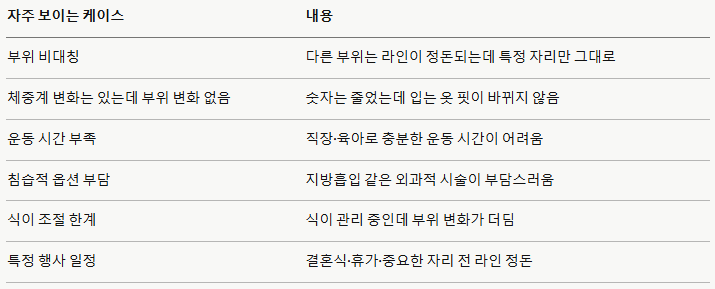
If any of these cases sound like you, it's time to consider localized line care.
Why do certain areas remain until the end?
There is a reason why fat loss speed varies by area even with the same diet.
1) Distribution of Fat Cell Receptors
Fat cells have two types of receptors.
Areas with many beta-receptors release fat easily,
while areas with many alpha-receptors have a strong tendency to store fat.
Stubborn areas like the inner thighs and lower abdomen
are known to have a high distribution of alpha-receptors.
2) Hormonal Influence
Female hormones tend to store fat in areas like the thighs and buttocks.
Around menopause, changes may occur where fat accumulates in the abdominal area.
3) Stagnation of Lymphatic Flow
Areas with poor lymphatic circulation are prone to the accumulation of waste and fat.
The inner thigh is a representative example.
4) Posture and Habits
Prolonged sitting, the habit of crossing legs to one side,
and incorrect walking patterns can also create differences in fat distribution by area.
It's similar to how certain spots in a parking lot always seem to stay empty.
This is because the flow of fat entering and leaving varies by location.
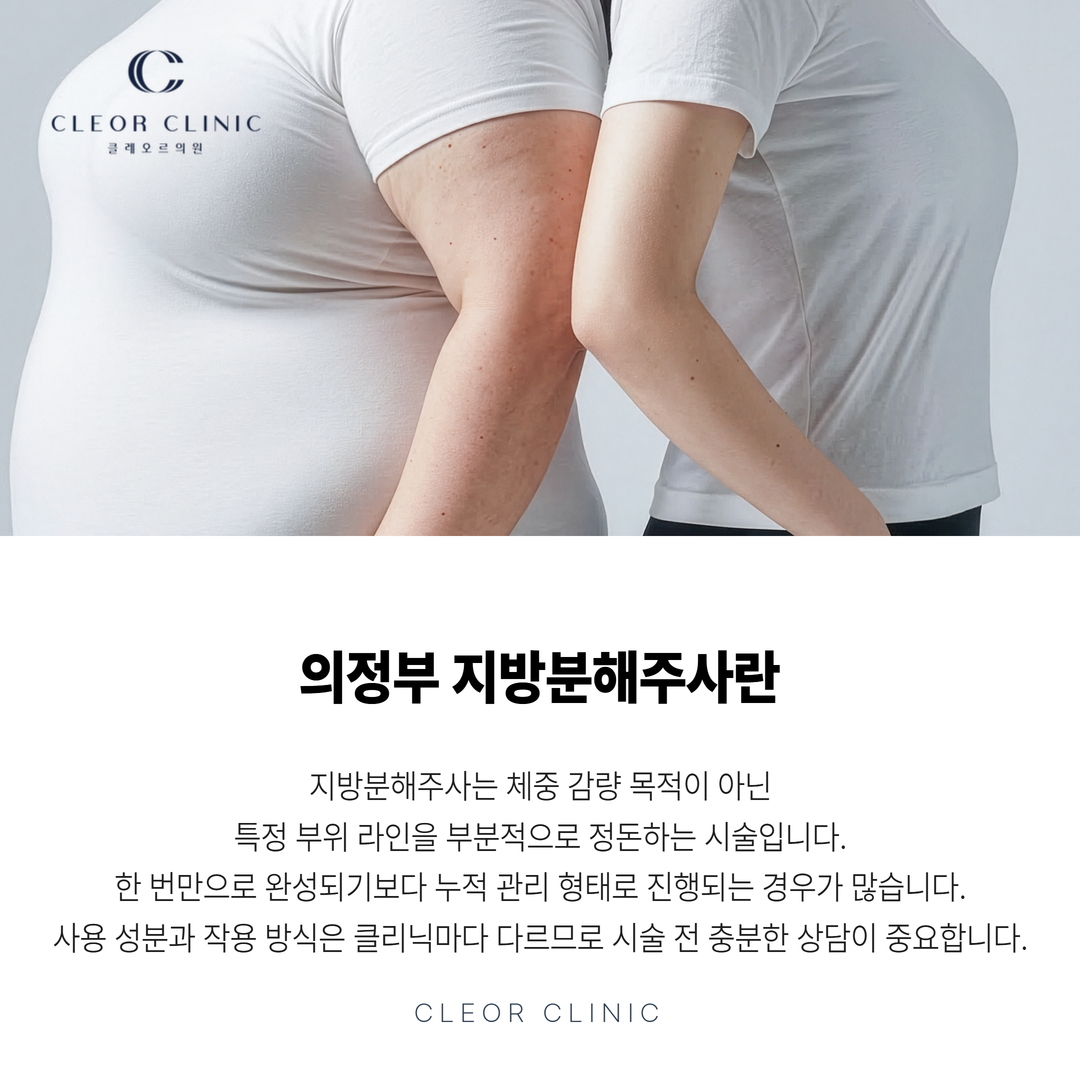
What are Uijeongbu Fat-Dissolving Injections?
Let's clarify exactly what fat-dissolving injections in Uijeongbu are.
First, I will address the most common misconceptions.
Misconception 1: It is not a weight-loss procedure.
Fat-dissolving injections are not intended to lower the numbers on the scale.
Weight change is a matter of diet, exercise, and metabolic control;
Uijeongbu fat-dissolving injections are a tool for partially refining specific areas within that framework.
Misconception 2: Results are not achieved in a single session.
While some may notice a difference after one session,
it is generally a category where results are established through cumulative treatments.
When fat-dissolving ingredients are injected into the subcutaneous fat layer,
the action is delivered to the fat layer distribution environment of that area.
The fat components trapped inside the cells become easier to release,
and are known to flow into metabolic pathways through lymphatic vessels and microcirculation.
Fat-dissolving injections use different ingredients at each clinic, and the mechanism of action varies depending on those ingredients.
You will receive guidance on the specific ingredients and mechanism of action during your pre-treatment consultation.
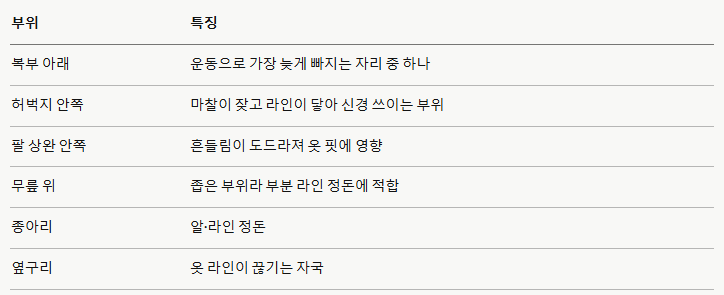
Application by Area
These are the areas where Uijeongbu fat-dissolving injections are frequently used.
There are various lines of fat-dissolving injections.
Fat-dissolving injections are operated in several lines depending on the dosage and scope of application.
There are options for localized care of narrow areas,
and options for treating wide areas at once.
Localized Care for Narrow Areas
Limited areas such as upper arms, knees, and calves.
Those trying fat-dissolving injections for the first time.
Those who want to refine just one or two areas without burden.
Wide Area Care
Large areas such as the entire abdomen or both thighs.
Those who want to treat multiple areas at once.
Those who want to reduce the number of treatment sessions.
Depending on your target area, goals, and fat layer thickness,
the appropriate line will vary, so it is best to receive guidance during a pre-treatment consultation.
Advantages of Uijeongbu Fat-Dissolving Injections
The biggest advantage is that you can directly choose the areas you want to refine for localized care.
As a non-invasive method performed via injection without incisions, the recovery burden is relatively low.
Another strength is that it is considered an alternative for areas that diet and exercise alone cannot reach.
The dosage and number of sessions can be adjusted according to the area and scope, allowing for a customized plan.
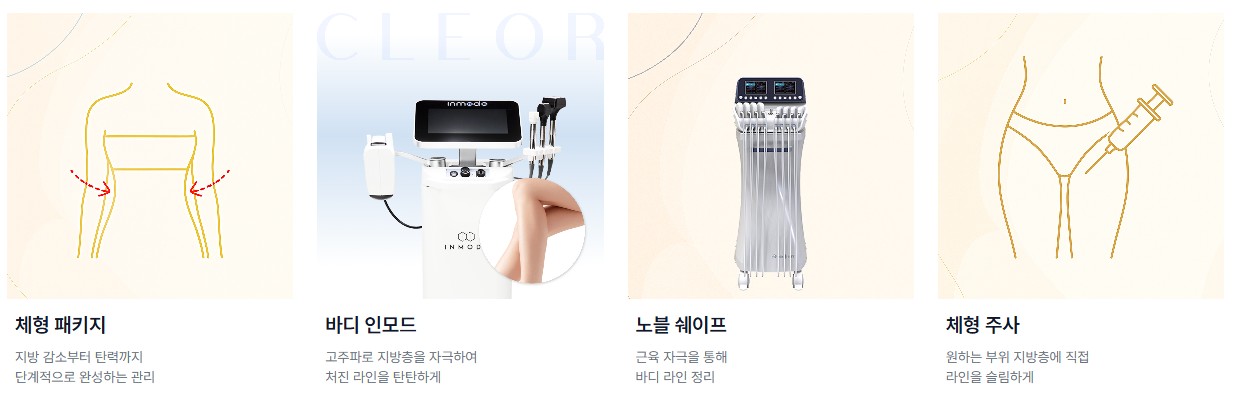
It is also a category that can be combined with lifting or other body care treatments.
Uijeongbu fat-dissolving injections are not a category that concludes with a single treatment.
For fat layers that have been established for a long time, changes stabilize through cumulative treatments.
Generally Recommended Protocol
2–4 week intervals
3–5 or more cumulative sessions
The number of sessions is adjusted based on the area's scope and fat layer thickness.
It is known that dissolved fat cells themselves do not regenerate.
However, remaining cells can expand again due to new calorie accumulation,
so post-treatment diet and activity management determine the maintenance of results.
Pain and Recovery
Pain patterns for fat-dissolving injections vary depending on the treatment area and the ingredients used.
During the process of injecting into the subcutaneous fat layer,
stinging and a burning sensation in the treatment area are common.
In particular, DCA-based ingredients are known to cause heavy tenderness and a burning sensation
immediately after and for several days following the procedure.
To reduce the burden of pain, the procedure can be performed after applying anesthetic cream,
or you may receive additional pain relief options depending on the medical institution.
Commonly Reported Post-Treatment Symptoms
- Bruising at the treatment site (a few days to 1–2 weeks)
- Heavy tenderness and burning sensation
- Mild swelling
- Temporary heat and tingling sensation
- Pain when touching the area, depending on the site
Most symptoms subside within a few days to 1–2 weeks, but recovery patterns vary significantly between individuals.
When DCA (Deoxycholic Acid)-based ingredients are used
DCA ingredients act directly on fat cells to induce dissolution,
and it is known that swelling and tenderness may persist for more than a week during this process.
You will be informed about the ingredients used in your treatment and the expected pain patterns during your pre-treatment consultation.
⚠️ Post-Treatment Precautions
For 2–3 days after treatment
Refrain from strong massage, meridian massage, or pressure on the treatment area.
Refrain from wearing tight shapewear that applies pressure.
A period when itching or redness may occur at the treatment site.
For about 1 week after treatment
Refrain from drinking and smoking.
Refrain from saunas, jjimjilbangs, and hot baths.
Refrain from strenuous exercise or activities that cause heavy sweating.
Drinking plenty of water for a certain period after treatment helps with the discharge of waste products.
When to Resume Exercise
Refrain from strenuous exercise on the day of treatment.
Light activity is possible from the next day.
Resume full-scale exercise after bruising and swelling have subsided.
Symptoms Requiring Immediate Visit
Persistent severe pain.
Discoloration of the treatment site.
Intense heat or rash.
Severe edema persisting for more than a week.
Cases to be Confirmed During Pre-Treatment Consultation
If you are pregnant or breastfeeding.
If you have a history of cardiovascular, liver, or kidney disease.
If you have been diagnosed with an autoimmune disease.
If you are regularly taking anticoagulants.
If you have a history of drug allergies.
If there is active inflammation or a wound at the treatment site.
For those with very thick fat layers, Uijeongbu fat-dissolving injections
may have limitations alone, and other invasive options may be considered.
Areas with reduced skin elasticity may be difficult to refine
with injections alone, so a combination with lifting procedures may be considered.
Difference from Diet Medication
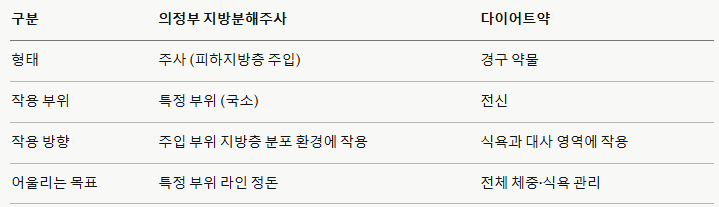
Apart from localized care, some medical institutions offer
diet medication prescriptions for appetite and metabolism.
I will compare the two as their areas of action differ.
The appropriate choice depends on whether your goal is localized line refinement or overall weight management.
Diet medications often include prescription drugs such as appetite suppressants,
so underlying conditions and medication history are checked first during the pre-treatment consultation.
❓ Frequently Asked Questions
Q. Is the change in size visible after one session?
Some individuals feel a refined impression of the area's size after a single treatment.
However, for fat layers established over a long time,
the extent of change often becomes clear through cumulative sessions, and individual results may vary.
Q. How much pain is involved?
The sensation of injecting into the subcutaneous fat layer is about a stinging level.
Most people find it quite tolerable,
and those sensitive to pain can reduce the burden with the application of anesthetic cream.
Q. What kind of clothes should I wear after the procedure?
Please refrain from applying strong pressure to the treatment area with tight shapewear for 2–3 days after the procedure.
Soft, breathable clothing helps with recovery.
Q. When can I start exercising?
Avoid strenuous exercise on the day of treatment; light walks are possible from the next day.
It is best to start full-scale exercise after bruising and swelling have subsided,
and it is recommended to refrain from saunas and jjimjilbangs for about a week after the procedure.
Q. Does the recovery pattern vary by area?
Yes, there are differences by area.
Wider areas like the thighs tend to have more prominent bruising and swelling,
while narrower areas like the knees or calves are known for a smoother recovery.
Q. What are the potential side effects?
Bruising, swelling, tenderness, tingling, mild heat, and temporary dizziness may occur at the treatment site.
Rarely, allergic reactions, nodules, or skin irritation reactions
have been reported, making pre-treatment consultation and post-treatment follow-up important.
Q. How long do the effects last?
It is known that dissolved fat cells themselves do not regenerate.
However, remaining cells can expand again due to new calorie accumulation,
so post-treatment diet and activity management are key to maintenance.
Areas that diet and exercise cannot reach are not due to a lack of effort.
It is simply that the fat distribution characteristics of those areas are different.
Uijeongbu fat-dissolving injections are an option for partially refining only those areas difficult to reach through diet and exercise.
It is important to clarify in advance that it is not a weight-loss procedure
and that it is a category where cumulative treatments are recommended.
Since the appropriate line and dosage vary depending on the area, fat layer thickness, and history of underlying diseases,
a customized plan for your condition is the priority.
We will confirm this directly during your consultation.
If you are concerned about areas where fat won't go away until the end,
please feel free to contact Cleor Clinic Uijeongbu.
※ This content is for general informational purposes, and results may vary by individual.
Please decide on the exact diagnosis and treatment through a consultation with a specialist.