
Hello.
I am Dr. Hyuk-chan Jo, Director of Cleor Clinic Uijeongbu Branch.
Have you ever been confused because PDRN is frequently seen in cosmetic advertisements these days, while PN is labeled on hospital skin boosters?
"They both come from salmon, so why are their names different and why are they used for different purposes?"
"I'm also curious if using PDRN cosmetics diligently at home can replace the effects of hospital skin boosters."
These are questions many people actually have.
Although PDRN and PN have similar names and the same origin, they are often used interchangeably, but they are confirmed to be completely different substances in terms of molecular weight, medical classification, and the layer they act upon.
If you understand this difference, it becomes clear why ingredients for cosmetics and ingredients for hospital procedures are managed differently, and why specific ingredients are used for skin booster procedures.
Today, I will summarize the differences between PDRN and PN based on international academic standards,
and we will look at why Rejuran in Uijeongbu has become a representative option for the PN line.
Differences between PDRN and PN
👉 The difference between PDRN and PN is that although they are often used interchangeably because both ingredients originate from the same salmon and trout germ cells and go through similar production processes,
they are clearly distinguished substances based on molecular weight and intended use.
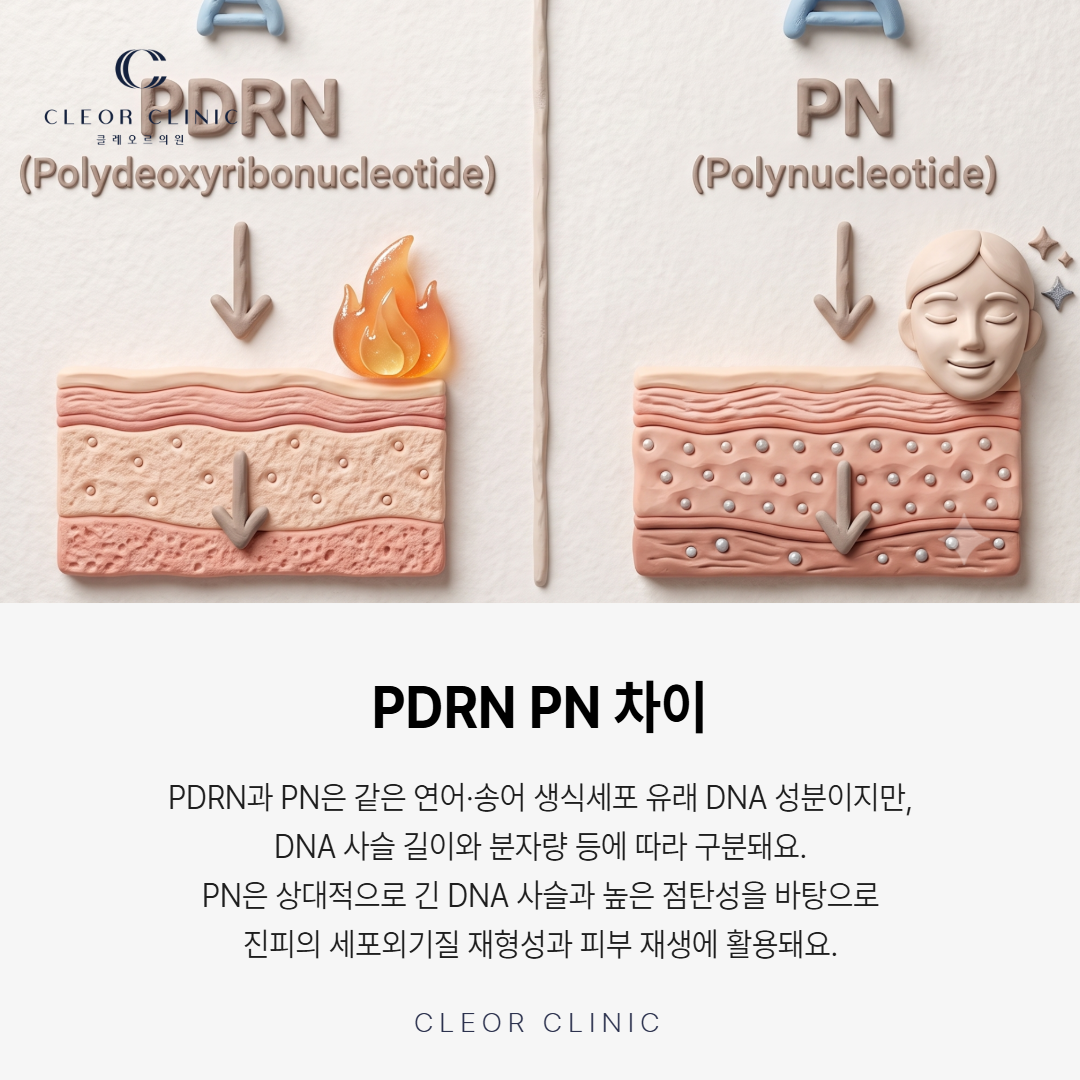
Same root, different results
PDRN (Polydeoxyribonucleotide) and PN (Polynucleotide) are
both made by extracting DNA fragments from the germ cells of salmon and trout.
Although the basic raw materials and production processes are similar, the length of the DNA chains remaining during the purification process differs,
so they are known to be separated into substances with different characteristics.
International academic standard naming
In an international academic paper published in 2025, to solve the problem of the two ingredients being used interchangeably,
a standard called the Marques Polynucleotide Cutoff was proposed.
It is a standard that classifies those with a molecular weight of 1500 kDa or more as PN, and those below that as PDRN,
and it is being discussed in academia as a standard for clearly distinguishing the two ingredients.
What is PN?
👉 PN is a biopolymer composed of long DNA chains with a molecular weight of 1500 kDa or more,
and thanks to its 3D porous structure, it is an ingredient that is injected directly into the dermis and involved in extracellular matrix remodeling.
Physical properties of PN
PN is composed of relatively long DNA chains.
It is known that these long chains form a 3D porous structure and have high viscoelasticity.
Thanks to its high viscoelasticity, it tends to maintain its shape and stay in the dermis for a long time when injected.
Medical classification of PN
PN is classified as a medical device in Korea.
It is mainly used for aesthetic procedures such as fillers, skin boosters, and knee joint injections, as well as joint treatment,
and because it is injected directly into the dermis, it can only be performed at professional medical institutions.
Mechanism of action of PN
When PN settles in the dermis, it plays a key role in extracellular matrix (substances outside cells that maintain the structure of skin tissue) remodeling.
It reacts with cell surface receptors to promote the synthesis of collagen and elastin,
and proceeds in a direction that induces the regeneration of the skin tissue itself.
According to clinical data, skin elasticity and moisture content are reported to have improved by approximately 20% each 4 weeks after Rejuran (PN line) treatment.
What is PDRN?
👉 PDRN is a biological ingredient composed of short oligonucleotide sequences with a molecular weight of 50–1500 kDa,
and it is an ingredient that induces wound healing and anti-inflammatory effects by activating adenosine receptors.
Physical properties of PDRN
PDRN is composed of shorter DNA fragments than PN.

Because its molecular weight is relatively low and its viscoelasticity is low,
it has characteristics suitable for cosmetic formulation design or application to wound areas.
Medical classification of PDRN
PDRN is classified as a pharmaceutical product in Korea.
It received pharmaceutical approval from the Ministry of Food and Drug Safety in 2008,
and is used in various fields such as wound healing from skin grafts, artificial tears, and orally disintegrating films.
Recently, as cosmetics containing PDRN have been launched by cosmetic brands,
it is known to be receiving attention in the home care market.
Mechanism of action of PDRN
PDRN induces cell regeneration and anti-inflammatory effects through the activation of adenosine A2A receptors and the nucleic acid recycling pathway.
Because it mainly acts on the epidermis, it is suitable for skin barrier regeneration and inflammation relief,
and is an ingredient used in wound recovery, artificial tears, and basic cosmetics.
Key summary of PDRN and PN differences
👉 The difference between PDRN and PN is usually clearly understood if you summarize it from four perspectives: molecular weight, medical classification, acting layer, and main use.
Difference in molecular weight
PN: 1500 kDa or more (long chain, 3D porous structure)
PDRN: 50–1500 kDa (short fragments, low viscoelasticity)
Difference in medical classification
PN: Medical device (exclusive to professional medical institution procedures)
PDRN: Pharmaceutical (used for wound healing agents, cosmetic raw materials)
Difference in acting layer
PN: Direct injection into the dermis (skin booster procedure)
PDRN: Acts on the epidermis (cosmetic application, wound area treatment)
Difference in main use
PN: Wrinkle improvement, elasticity enhancement, extracellular matrix remodeling (focused on aesthetic procedures)
PDRN: Wound healing, anti-inflammatory, tissue recovery (therapeutic purpose + cosmetics)
Because of this difference, PDRN cosmetics for home care and PN for hospital skin boosters are known to be irreplaceable.
PDRN cosmetics are suitable for maintaining epidermal condition and soothing, while PN skin boosters approach dermal regeneration, so the purpose itself is different.
Why is PN used for skin boosters?
👉 For skin boosters that aim for dermal regeneration, such as Rejuran in Uijeongbu,
the PN ingredient, which reacts directly with dermal tissue that is difficult to access through epidermal application, is suitable.
Necessity of a dermal approach
Skin aging, fine lines, and loss of elasticity are known to start mostly from the decrease of collagen and elastin in the dermal layer.
Since it is difficult for ingredients to reach the dermis even if applied to the surface of the epidermis because they are blocked by the waterproof barrier,
a method of direct injection into the dermis is suitable for fundamentally approaching dermal regeneration.
Dermal retention characteristics of PN
Thanks to its 3D porous structure, PN tends to maintain its structure and stay in the dermis for a long time when injected.
During this time, cell regeneration signals are continuously activated, leading to collagen synthesis.
Position of Rejuran in Uijeongbu
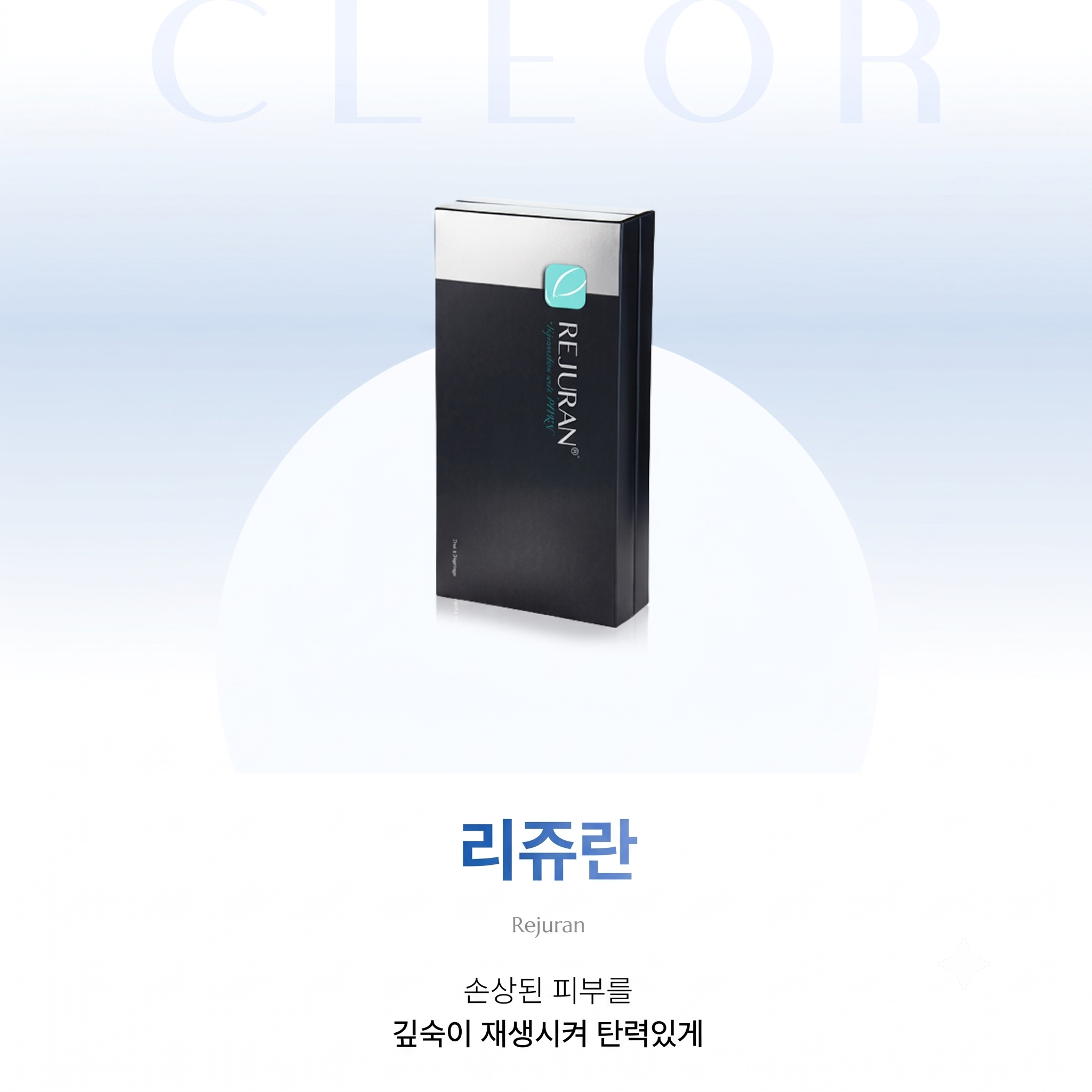
Rejuran is a PN-line skin booster brand developed by PharmaResearch in Korea.
Because it uses the characteristics of the PN ingredient to induce the regeneration of the skin tissue itself,
it has become a suitable option when you want to approach dermal regeneration.
Rejuran in Uijeongbu operates this PN-line option by dividing it by area and purpose.
PN-line lineup of Rejuran in Uijeongbu
👉 Rejuran in Uijeongbu has various PN-line options prepared according to the treatment area and purpose,
so you can choose an approach that suits your individual skin condition.
Elasticity and fine line management · Rejuran Healer
This is the basic option that approaches the improvement of overall facial elasticity and fine lines.
The PN ingredient is used to induce collagen synthesis in the dermis to approach fundamental regeneration.
Premium with reduced pain burden · Rejuran HB Plus
This is an upgraded option where hyaluronic acid and lidocaine are combined with the existing PN.
It is known as a premium method where hyaluronic acid fills in the glow and moisture, and lidocaine relieves pain, allowing for comfortable treatment.
Eye area exclusive · Rejuran i
This is an option exclusively for the eye area, with a composition readjusted to suit the thin and sensitive eye area.
It is used to approach fine lines around the eyes and dark circles.
Lip moisturizing · Lipjuran
This is an option specialized for lip moisturizing and improvement of dryness.
It is operated by using the Rejuran HB ingredient to approach lip tissue regeneration.
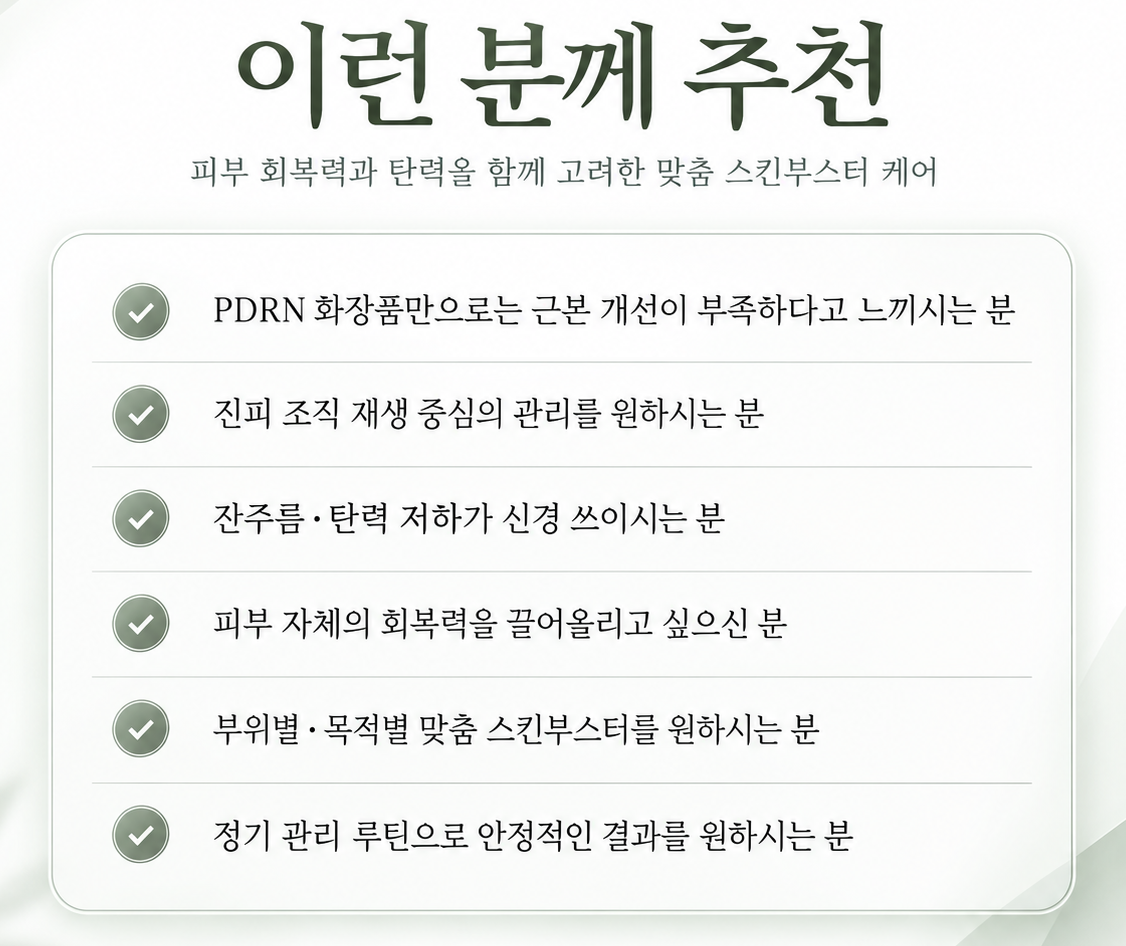
Who is Rejuran in Uijeongbu suitable for?
Those who feel that fundamental improvement is lacking with PDRN cosmetics alone
Those who want to approach dermal tissue regeneration
Those who are concerned about fine lines and loss of elasticity
Those who want to boost the skin's own recovery power
Those who want customized skin boosters by area and purpose
Those who want stable results through a regular management routine
Side effects of Rejuran in Uijeongbu and things to know in advance
👉 Although Rejuran in Uijeongbu is an option using the human-friendly PN ingredient,
initial reactions may appear differently depending on individual skin conditions and the treatment area.
Immediately after the procedure, redness, micro-swelling, thin bruising, and temporary embossing marks may appear on the treated area.
Embossing is known as a natural sign that the ingredient has settled accurately in the dermis,
and it usually clears up naturally within a few days.
Rejuran procedures are performed by hand injection, so the practitioner's accurate judgment and manual skill affect the stability of the results.
The direction of the procedure is decided after checking your skin condition in a pre-consultation according to the guidance of experienced medical staff.
Although PN is a salmon-derived ingredient, it is reported that it is highly purified and allergy-causing proteins are removed.
However, if you have a severe seafood allergy, please be sure to inform us during the pre-consultation.
Since the procedure results are established through cumulative sessions,
stable improvement is confirmed through regular sessions rather than dramatic changes from a single procedure.
If any of the following apply to you, the procedure may be restricted or
prior confirmation may be required, so please inform us during the consultation.
If you are pregnant or breastfeeding
If there is an active infection, wound, or herpes in the treatment area
If you have a history of salmon or seafood allergy
If you have a history of lidocaine allergy (when using Rejuran HB Plus)
If you are regularly taking anticoagulants or antiplatelet agents, or have a bleeding tendency
If you have been diagnosed with an autoimmune disease or keloid constitution
If you have a history of filler or thread procedures in the treatment area recently
⚠️ Precautions before and after the procedure after understanding the PDRN and PN differences
👉 PN-line skin boosters are options where result stability and recovery speed vary depending on pre-procedure condition management and post-procedure moisturizing and UV protection.
❓ Frequently Asked Questions (FAQ)
Q. Please summarize the difference between PDRN and PN simply.
The biggest difference is molecular weight and use.
PN is a medical device for hospital procedures aimed at dermal regeneration with long chains of 1500 kDa or more, while PDRN is used as a pharmaceutical or cosmetic raw material aimed at wound healing and anti-inflammation with short fragments of 1500 kDa or less.
Q. Even if there is a difference between PDRN and PN, can I just use PDRN cosmetics diligently at home?
The two ingredients have different purposes and are known to be irreplaceable. PDRN cosmetics are suitable for maintaining epidermal condition and soothing, but it is difficult to approach dermal regeneration, so if you want fundamental regeneration, a PN-line skin booster is suitable.
Q. Does the difference between PDRN and PN also affect the procedure results?
Yes, it does. If the goal of the skin booster is dermal regeneration, PN, which settles in the dermis and stays for a long time, is suitable, and if epidermal recovery and soothing are the goals, a formulation containing PDRN is suitable, so the ingredients are used differently according to the purpose.
Q. Because of the difference between PDRN and PN, isn't Rejuran released as a cosmetic?

In addition to the PN for Rejuran procedures, PharmaResearch also operates a line of cosmetics containing PDRN called Rejuran Cosmetic.
A method of combining PN for procedures and cosmetics containing PDRN for home care is frequently used.
Q. How many sessions of Rejuran in Uijeongbu should I receive?
Generally, regular sessions of 3 or more times at 2-4 week intervals are recommended.
After that, a direction that continues the results with maintenance care is suitable, and since the session plan varies depending on the area and purpose, a suitable direction will be guided during the pre-consultation.
Q. How much pain is there with the Rejuran in Uijeongbu procedure?
It is performed after applying anesthetic cream before the procedure, and strong pain is low.
In particular, Rejuran HB Plus contains lidocaine, so it is reported in manufacturer clinical trials that pain is significantly reduced compared to the existing Rejuran Healer.
Q. When can I see the results of Rejuran in Uijeongbu?
Changes in skin condition are slowly confirmed from 2-3 weeks after the procedure.
According to clinical data, skin elasticity and moisture content were reported to have improved by approximately 20% each 4 weeks after the procedure, and results are stably established as sessions accumulate.
Although PDRN and PN are often used interchangeably because both ingredients originate from the same salmon,
they are known to be clearly distinguished substances from all perspectives: molecular weight, medical classification, acting layer, and main use.
PN is a medical device for hospital procedures aimed at dermal regeneration,
and PDRN is used as a pharmaceutical or cosmetic raw material aimed at wound healing and anti-inflammation; remembering this will make it easier to understand.
The two ingredients are not substitutes for each other, but are known to be related in a way that they can be used together depending on the purpose.
The Uijeongbu branch operates various options of the Rejuran brand, which represents this PN line.
From Rejuran Healer for elasticity and fine line management,
Rejuran HB Plus, a premium option with reduced pain burden,
Rejuran i exclusively for the eye area, to Lipjuran for lip moisturizing,
you can choose an approach that suits the area and purpose.
We will check the direction that fits your skin condition and management purpose directly during the consultation.
If you understand the difference between PDRN and PN and want to approach dermal regeneration,
please feel free to visit Cleor Clinic Uijeongbu Branch.
Even before deciding on a procedure, you can check your skin condition and a suitable session plan together through a pre-consultation.
※ This content is for general information purposes, and results may vary by individual.
Please decide on accurate diagnosis and whether to proceed with the procedure through a specialist consultation.
Q. 의정부 리쥬란 결과는 언제부터 확인할 수 있나요?
시술 후 2~3주부터 피부 컨디션 변화가 서서히 확인되는 편이에요.
임상 자료에 따르면 시술 4주 후 피부 탄력도와 수분 함유량이
각각 약 20% 개선된 것으로 보고되었으며, 회차 누적 시 결과가 안정적으로 자리 잡습니다.

PDRN PN 차이는 두 성분이 같은 연어에서 유래해 자주 혼용되지만
분자량·의료 분류·작용 층·주요 용도
모든 관점에서 뚜렷하게 구분되는 물질이라고 알려져 있어요.
PN은 진피 재생을 목표로 하는 병원 시술용 의료기기이고,
PDRN은 상처 치료와 항염을 목표로 하는 의약품 또는
화장품 원료로 활용된다는 점을 기억하시면 이해가 명확해져요.
두 성분은 서로 대체 관계가 아니라 목적에 따라
함께 활용될 수 있는 관계로 알려져 있어요.
의정부점에서는 이 PN 계열을 대표하는
리쥬란 브랜드의 다양한 옵션을 함께 운영하고 있어요.
탄력과 잔주름 관리를 위한 리쥬란 힐러,
통증 부담을 낮춘 프리미엄 옵션인 리쥬란 HB 플러스,
눈가 전용 리쥬란 아이, 입술 보습을 위한 립쥬란까지
부위와 목적에 어울리는 접근을 선택하실 수 있어요.
본인 피부 상태와 관리 목적에 맞는 방향은 상담 시 직접 확인해 드립니다.
PDRN PN 차이를 이해하시고 진피 재생을 접근하고 싶으시다면
클레오르의원 의정부점으로 부담 없이 방문해 주세요.
시술 결정 전이라도 사전 진료를 통해
본인 피부 상태와 어울리는 회차 계획을 함께 살펴보실 수 있어요.
※ 본 내용은 일반적인 정보 제공을 위한 글이며, 개인에 따라 결과는 달라질 수 있습니다.
정확한 진단과 시술 여부는 전문의 상담을 통해 결정하시기 바랍니다.