
Hello.
I am Director Hyuk-chan Jo of Cleor Clinic Uijeongbu Branch.
When you zoom in on your face in a group photo, there are moments when you feel fine from the front, but the angle taken from the side looks particularly unfamiliar.
Even if you haven't gained weight or aren't feeling bloated, the area from under your ears to your jawline can look thick, making you stare at it for a long time while scrolling through photos.
The thickness under the ears is not created by a single type of tissue.
Chewing muscles are placed over the angle of the bone, fat is layered on top of that, and the salivary glands are located at the very back.
Even with the same face shape, the layer that contributes most to the thickness varies from person to person, and the salivary glands are a layer where the level of stimulation varies depending on whether your usual diet is chewy.
Today, I will explain step-by-step what Uijeongbu salivary gland Botox is, which stage of the saliva production process it reduces, what its strengths are, and what you should know in advance.
What is Uijeongbu salivary gland Botox
👉 Uijeongbu salivary gland Botox is a treatment that temporarily reduces the amount of secretory stimulation directed toward the parotid gland located under the ears, examining both the activity of the gland and the volume of the side profile.
The parotid gland is the largest of the three pairs of major salivary glands in the body, and it is spread widely from the front of the ear to the angled part of the lower jawbone.
It is an organ with relatively clear boundaries wrapped in a thin capsule, and because the skin and fat layers covering it are not thick, its volume is easily reflected in the side contour of the face.
This is why the cause is not always just muscle or fat when the jawline looks blurred.

The salivary gland is a tissue classified as an exocrine gland.
Unlike endocrine glands that release hormones into the blood, it refers to a structure that sends out produced substances to the space outside the body along a duct.
The inside of the parotid gland consists of clusters of secretory cells gathered like grapes and ducts that carry them. Secretory cells draw water and electrolytes from surrounding blood vessels to create thin saliva and send it into the ducts.
The composition is adjusted while passing through the ducts before it comes out into the inside of the cheek.
The botulinum toxin used here is a protein component that temporarily blocks the stage where acetylcholine, a neurotransmitter that passes commands from nerve endings to the next cell, is released.
In the salivary glands, the fact that the recipient of this command is a secretory cell rather than a muscle distinguishes its nature.
Procedure and Composition
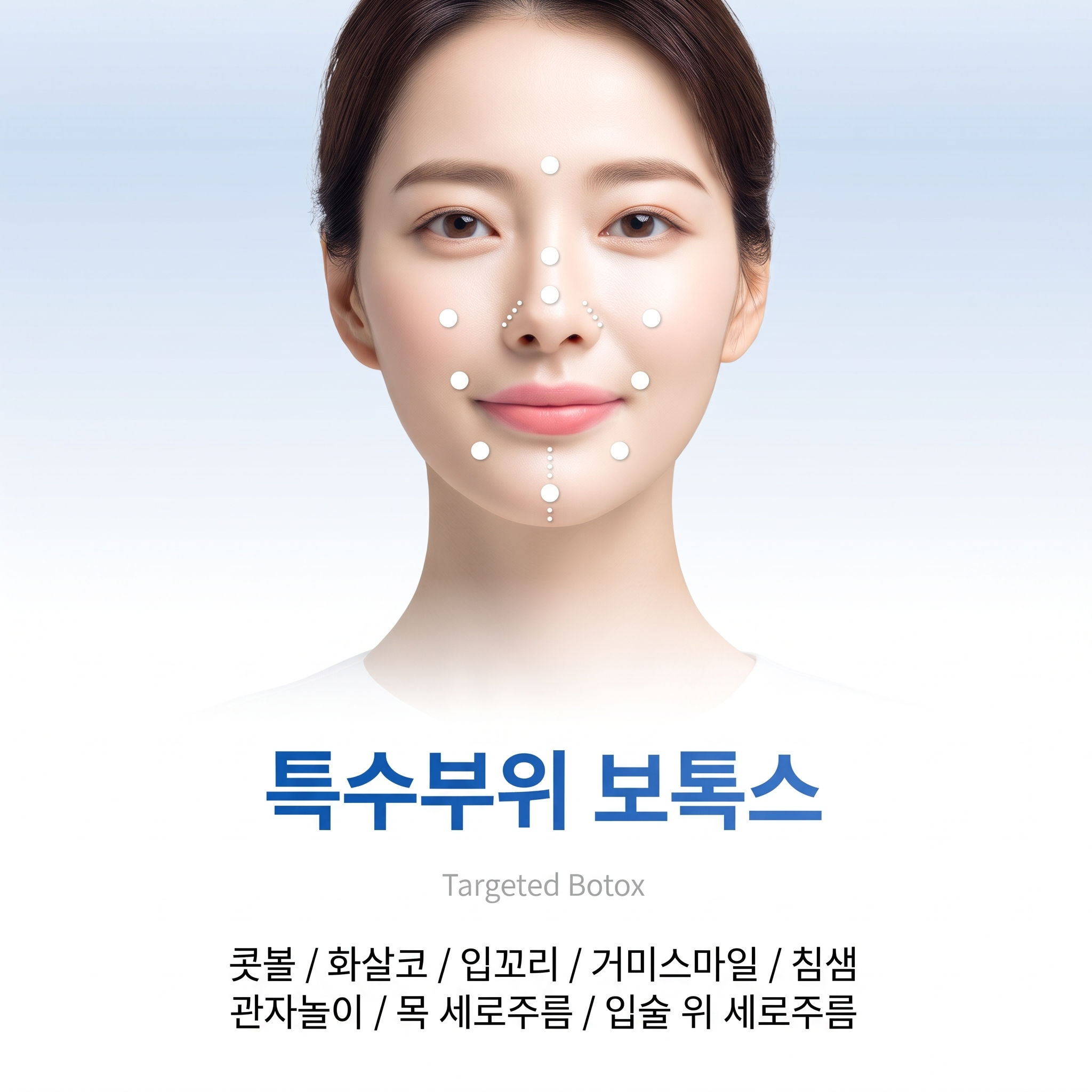
👉 Salivary gland Botox at Cleor Clinic Uijeongbu Branch is classified as a special area Botox, and the composition varies depending on the product used.
Salivary gland Botox is not a procedure that uses equipment to deliver energy, but one where botulinum toxin is injected into specific points.
Therefore, the criteria for the composition are not the machine, but the product, the injection points, and the number of points distributed on one side.
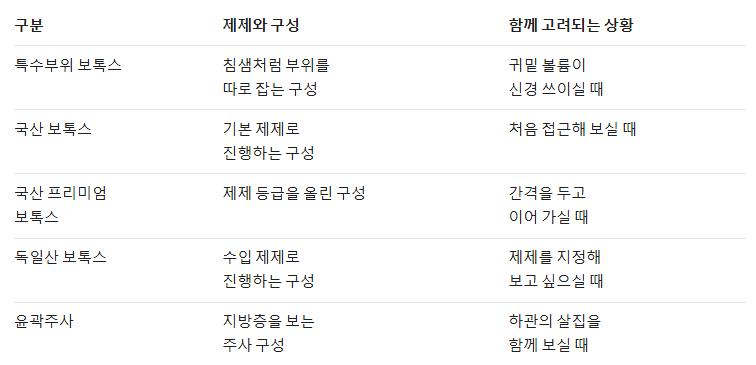
At Cleor Clinic Uijeongbu Branch, we offer domestic, domestic premium, and German products.
Even for the same area, the product to be used is decided by looking at your history and current condition together.
Because items with different characteristics are close to each other around the jaw, we first divide the range.
The composition for the chewing muscles, the composition for the secretory organs, and the injection composition for the fat layer are placed in different locations.
Even with the same salivary gland Botox, the impression changes depending on the number of injection points, the amount placed at each point, and how the left-right balance is maintained.
The product and range are determined after palpation during the consultation.
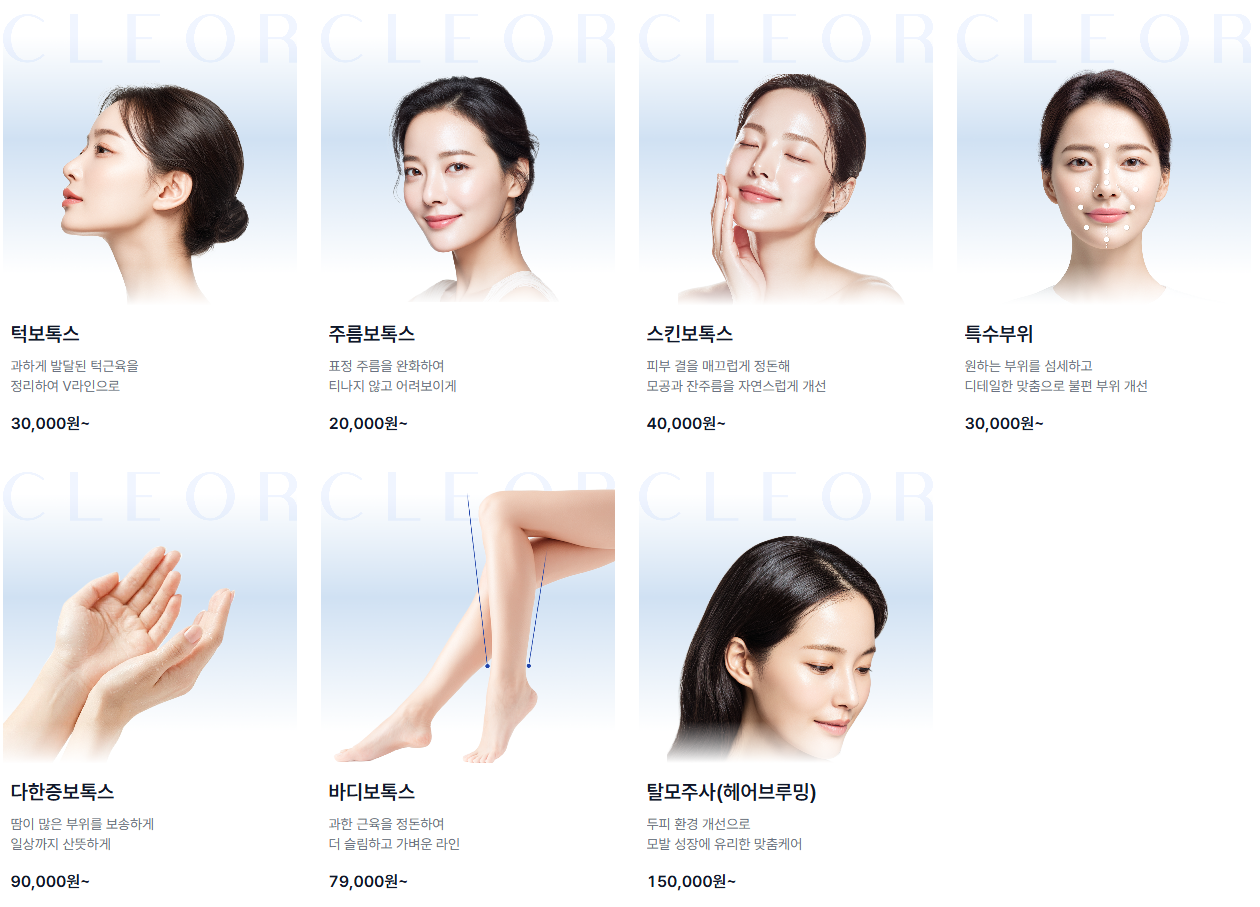
Types of Uijeongbu Botox
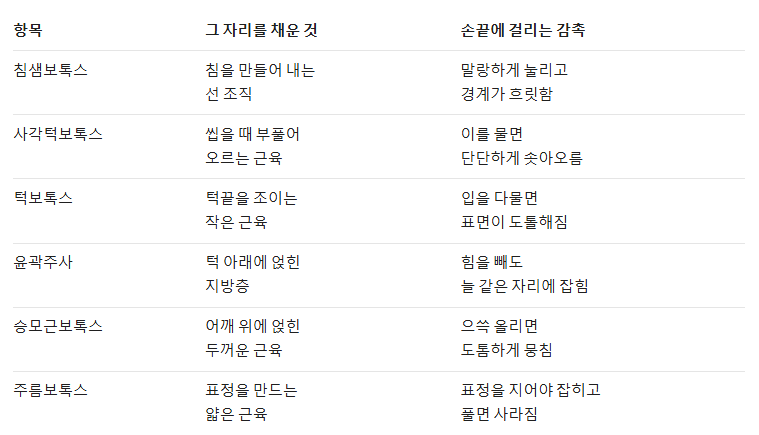
👉 The reason the lower face looks thick varies by tissue, so we first distinguish what is filling that space.
Even with the same thickness, if the texture felt at the fingertips is different, the treatment area is divided.
We determine the direction after touching the area while clenching and relaxing the muscles.
The Principle of Salivary Gland Botox
👉 We first lower the amount of secretory commands reaching the gland. It is reported that the volume of the gland with reduced activity reacts gradually afterward.
The starting point is stimulation.
Every time you chew food and taste it, acetylcholine is released from nerve endings and attaches to receptors on the surface of secretory cells, and the cells receive that command to draw in water and electrolytes to make saliva.
If you continue a lifestyle of chewing tough food for a long time or chewing only on one side, stimulation is concentrated on the gland on that side, and the frequently operated organ maintains its activity state and volume.
The site where the toxin intervenes is not the secretory cell itself, but the nerve ending in front of it.
When the stage where small vesicles containing acetylcholine connect to the cell membrane and release their contents stops, the amount of commands reaching the receptors on the surface of the secretory cells decreases.
Cells that receive fewer commands draw in less water and electrolytes, and the activity of producing and sending out saliva also decreases.
It is reported that as days of less gland operation accumulate, the size of the organ also changes slowly.
This is why it takes time to be visible, unlike when it is placed in muscles, so you do not need to judge based on the sensation of the first few days.
When the nerve endings regain their function, secretion also returns to its original speed, so it is closer to a management where you set the next timing while observing the condition rather than finishing with one session.
Strengths of Uijeongbu Salivary Gland Botox
👉 It utilizes the property that saliva is not stored in advance but is made whenever requested.
The targeted tissue is also different from the chewing muscles, and the range of action remains inside the capsule.
First, saliva is not a substance taken from a storage, but one made whenever a request comes.
Secretory cells do not store saliva and then release it; the moment stimulation arrives, they draw water and electrolytes from surrounding blood vessels and push the saliva into the ducts on the spot.
The sensation of your mouth becoming moist as soon as you smell food or think of sour food comes from this structure.
Therefore, if the amount of stimulation reaching the secretory cells decreases, production itself immediately drops to a low level.
This treatment is characterized by lowering the production speed rather than removing what has already been made.
Second, the targeted tissue is different from the chewing muscles.
Even in the same lower face area, the masticatory muscle is a tissue that contracts to exert force, and the salivary gland is a tissue that produces and releases substances, so the types of cells receiving commands are different.
Since the parotid gland is placed as if covering the masticatory muscles, it looks like one mass from the outside, but if you divide and touch the front part that becomes hard when you clench your teeth and the back part that feels soft when you relax, the positions of the two tissues can be distinguished.
The approach here is toward the back secretory tissue, so it is possible to adjust the side volume separately while leaving the chewing power intact.
Third, the range of action remains inside the capsule.
Toxin is not a component that spreads throughout the body via blood, but has a property of remaining at the nerve endings around the injection site, and the parotid gland is an organ with clear boundaries wrapped in a thin membrane, making it easy to limit the treatment range to the inside.
If you have a habit of chewing on only one side for a long time, the gland on that side is frequently stimulated, so the volume on both sides is often not the same. In such cases, an approach that balances the left and right sides comes from the same property.
If you are concerned about this angle
Those whose lower face catches their eye first in photos taken at an oblique angle
Those who feel a soft texture when pressing under the ear while relaxed
Those who have received treatment for jaw muscles but the side profile remained the same
Those who have a habit of chewing with only one molar for a long time
Those who want to refine the side line without affecting their chewing power
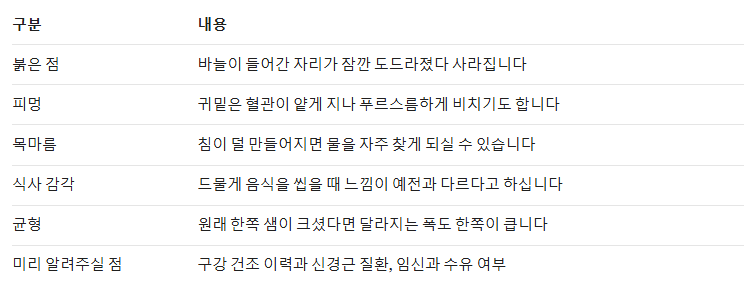
Possible Reactions and Things to Know
👉 Most things to know after the injection are temporary reactions, and it is reported that they often subside over time.
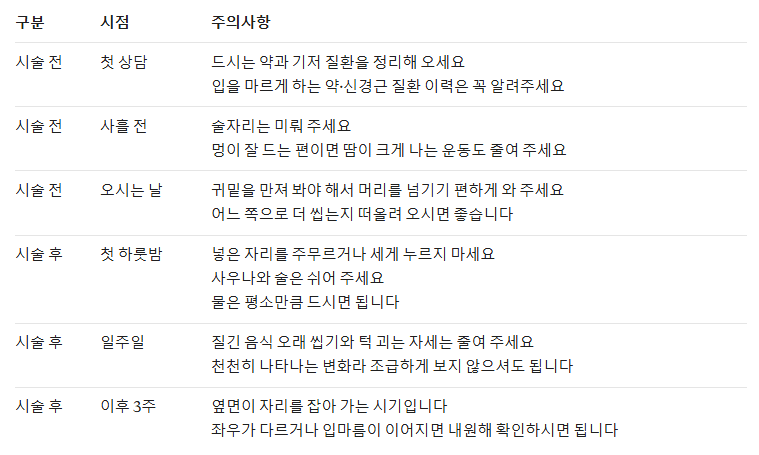
⚠️ Precautions before and after the procedure
❓ Frequently Asked Questions (FAQ)
Q. How is salivary gland Botox different from square jaw Botox?
A. The targeted tissue is different.
Square jaw Botox looks at the masticatory muscles that exert force, while salivary gland Botox looks at the secretory organs placed on top of them.
Even in the same lower face area, the direction varies depending on where the cause lies, and there are cases where both are examined side by side.
Q. Won't my saliva dry out too much?
A. We approach it by lowering the degree of excessive operation rather than stopping secretion.
However, you may feel dryness in your mouth, so it is recommended to pay more attention to water intake than usual.
Q. Will eating become uncomfortable after the injection?
A. Since we lower the commands going to the secretory cells rather than the muscles that exert chewing power, it is reported that many people do not feel a big change in daily meals.
We recommend reducing tough foods for the first few days.
Q. When will I feel the changes?
A. Because it goes through a sequence where the volume of the organ reacts after the secretory activity is lowered, it appears more gradually than when placed in muscles, and there are individual differences in the timing of feeling it.
Q. Is it a procedure that ends with one session?
A. When the nerve endings regain their function, secretion also returns to its original speed.
Therefore, it is natural to continue with management while observing the condition at intervals.
Q. Won't my cheeks look sunken after salivary gland Botox?
A. We do not remove the area under the cheeks entirely, but approach only inside the parotid gland range wrapped in a thin membrane.
We discuss the distribution differently depending on the face shape and remaining volume during the consultation.
Uijeongbu salivary gland Botox is a treatment that uses the property that saliva is not stored but made whenever requested, temporarily lowering the amount of commands reaching the secretory cells.
Since the type of cells receiving commands is different from the chewing muscles, you can look at the side volume separately while leaving the chewing function intact, and the action remains inside the organ wrapped in a thin membrane, making it easy to limit the range.
Even for the same lower face concerns, the proportion of the bone angle, muscle thickness, fat location, and gland volume varies from person to person, so the distribution is not fixed.
At Cleor Clinic Uijeongbu Branch, we check these parts directly during the consultation.
We also operate items that look at the jawline together, such as square jaw Botox or contour injections, so you can examine the range separately.
If you have been concerned about a thick-looking jaw, please feel free to talk to us.
※ This content is for general information purposes, and changes may vary depending on the individual.
Please determine the exact diagnosis and whether to proceed with the procedure through a consultation with a specialist.
이럴 때 좌우를 나누어 배분하며 균형을 보는 접근도 같은 성질에서 나옵니다.
이런 각도가 신경 쓰이신다면
비스듬한 각도로 찍힌 사진에서 하관이 먼저 눈에 들어오시는 분
힘을 뺀 채 귀 아래를 눌러 보면 물렁하게 잡히시는 분
턱 근육 쪽 관리를 받아 보셨는데 옆면은 그대로였던 분
한쪽 어금니로만 오래 씹는 버릇이 있으신 분
식사하는 힘은 건드리지 않고 옆선만 다듬고 싶으신 분
나타날 수 있는 반응과 알아두실 점
👉 주사 뒤에 미리 알아두실 점은 대부분 일시적인 반응이며, 시간이 지나며 가라앉는 경우가 많다고 보고됩니다.
⚠️ 진행 전후 주의사항
❓ 자주 묻는 질문 (FAQ)
Q. 침샘보톡스는 사각턱보톡스와 무엇이 다른가요?
A. 겨냥하는 조직이 다릅니다.
사각턱보톡스는 힘을 내는 저작 근육을 보고,
침샘보톡스는 그 위에 얹혀 있는 분비 기관을 봅니다.
같은 하관 자리여도 원인이 어느 쪽에 있는지에 따라 방향이
갈리며 두 가지를 나란히 살피는 경우도 있습니다.
Q. 침이 지나치게 마르지 않나요?
A. 분비를 멈추는 방향이 아니라 과하게 가동되던 정도를 낮추는 쪽으로 접근합니다.
다만 입안이 건조하게 느껴지실 수 있어 수분 섭취를 평소보다 신경 써 주시는 편이 좋습니다.
Q. 주사 후에 식사가 불편해지나요?
A. 씹는 힘을 내는 근육이 아니라 분비 세포로 가는 명령 쪽을 낮추므로
일상적인 식사에서 큰 변화를 느끼지 않는 분이 많다고 보고됩니다.
초반 며칠은 질긴 음식을 줄이시기를 권해 드립니다.
Q. 변화는 언제쯤 느껴지나요?
A. 분비 활동이 낮아진 뒤 기관의 부피가 뒤따라 반응하는 순서를 거치기 때문에
근육에 놓는 경우보다 완만하게 나타나는 편이며, 체감하시는 시점에는 개인차가 있습니다.
Q. 한 차례로 끝나는 항목인가요?
A. 신경 끝이 제 기능을 찾으면 분비도 본래 속도로 올라옵니다.
그래서 간격을 두고 상태를 보며 이어 가는 운용이 자연스럽습니다.
Q. 침샘보톡스 뒤에 볼이 꺼져 보이지 않을까요?
A. 볼 아래를 통째로 덜어 내는 방식이 아니라 얇은 막에
싸인 이하선 범위 안쪽으로만 다가갑니다.
얼굴형과 남은 볼륨에 따라 배분을 달리 보기에 진료에서 같이 짚어 봅니다.
의정부 침샘보톡스는 침이 저장되지 않고 요청받을 때마다 만들어진다는 성질을 이용해,
분비 세포에 닿는 명령의 양을 한동안 낮추는 케어입니다.
씹는 근육과는 명령을 받는 세포의 종류가 달라 저작 기능은 그대로 두고 옆면 볼륨만
따로 볼 수 있고, 작용도 얇은 막에 싸인 기관 안쪽에 머물러 범위를 한정하기 수월합니다.
같은 하관 고민이어도 뼈의 각도와 근육 두께, 지방의 위치,
샘의 부피가 차지하는 비중이 사람마다 달라 배분이 하나로 정해지지 않습니다.
클레오르의원 의정부점에서는 이런 부분을 상담 시 직접 확인해 드립니다.
사각턱보톡스나 윤곽주사처럼 턱선을 함께 보는 항목도 운영하고
있어 범위를 나누어 살펴보실 수 있습니다.
도톰해보이는 턱이 자꾸 신경 쓰이셨다면, 편하게 한 번 이야기 나눠 보셔도 좋겠습니다.
※ 본 내용은 일반적인 정보 제공을 위한 글이며, 개인에 따라 나타나는 변화는 달라질 수 있습니다.
정확한 진단과 시술 여부는 전문의 상담을 통해 판단하시기 바랍니다.